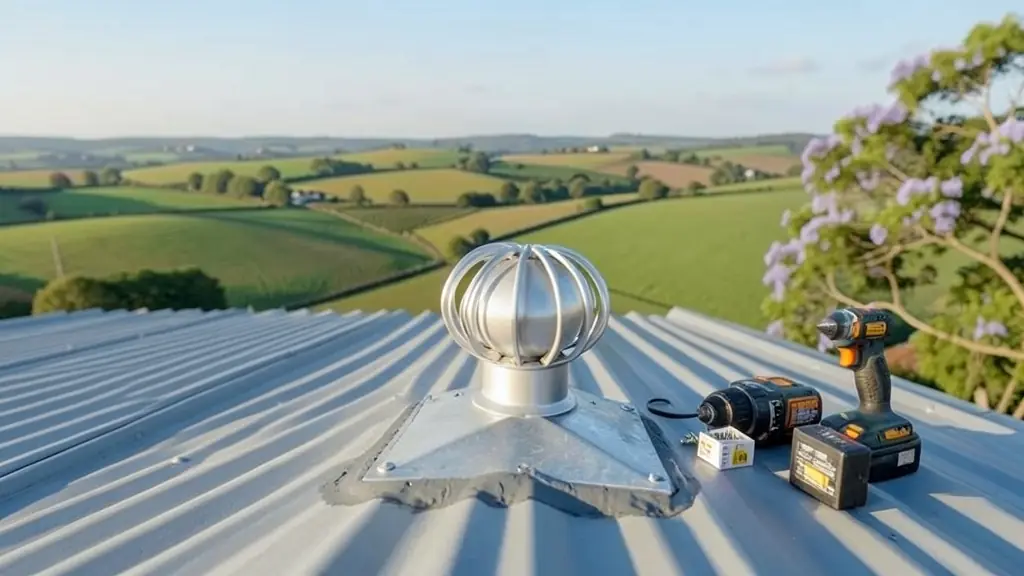
Whirlybird installation takes a roofer an hour or two per head on an easy roof, and most of that time goes into the details that stop leaks. The work is simple to describe: choose the spot, cut a round hole, fit a base that matches the roof covering, seal it, then set the head level so it spins true. The trouble is that each step has a common mistake, and a turbine fitted badly drips onto the ceiling boards at the first January storm.
Choosing the spot
High on the slope, a short way below the ridge, is where hot air gathers and the wind is strongest. Pick a slope facing away from the worst rain where you can. From inside the roof space, check the spot sits between trusses, clear of the purlins, the geyser, electrical cables and any solar panel rails. On a tiled roof, centre the hole on a tile or two so the base flashing laps evenly. Push a long screwdriver up through from below to mark the centre, so the hole you cut outside lands where you checked inside.
Cutting and the base
- Mark the throat circle, then cut sheeting with snips or a nibbler, never a grinder that leaves hot filings to rust.
- On IBR or corrugated, use a base made for that profile so it sits down into the ribs and is screwed through the crests.
- On concrete or clay tiles, remove a tile or two and use an adjustable base with a soft lead free flashing dressed over the tiles below.
- The adjustable neck lets you correct for the roof pitch.
Sealing, levelling and fixing
Seal under the base with a polyurethane roof sealant, not bathroom silicone. Set the head plumb with a spirit level: a tilted head wobbles, wears the bearing and starts to squeal within months. Fix the head to the neck with the screws supplied and check it turns freely by hand. In storm areas a hail guard or extra bracing can help. Then make sure the eaves let air in; see eave vents. A dry leak later? See roof vent leaks.
DIY or a roofer, and safety
A handy owner can fit one on a low single storey IBR roof with the right base. Steep tiles, double storeys and old roofs are roofer jobs. Wear a harness tied to a sound anchor and step only on the purlin lines, and never walk on the ceiling boards inside. Asbestos cement sheets are never cut or drilled except by a registered asbestos contractor. Find installers or count heads on the whirlybird calculator.
What to put in your request
- Name the roof covering and the rough pitch
- Say if the roof is single or double storey
- Mention any solar panels or a geyser up there
- Say if old vents must come out first
- Ask whether eave vents are in the price
Whirlybird Installation: who asks for them and why
- Homeowners and DIY: a turbine or two fitted to a tiled house roof before the summer storms
- Roofers and roofing contractors: a routine job priced per head fitted with base and sealant included
- Builders, developers and architects: turbines fitted while the roofers are on site and the sheets are new
- Factories, warehouses and workshops: a day of fitting with a cherry picker across a long workshop roof
- Offices, shops, restaurants and gyms: heads fitted after hours over a shop or restaurant to keep trading
- Farms, poultry houses and packsheds: turbines screwed onto corrugated roofs of stores and staff houses
- Schools, clinics, churches and halls: fitting done in school holidays with the hall or classrooms empty
- Landlords, body corporates and estate managers: one contractor fitting the same head and base across a complex
Frequently asked questions
How long does it take to install a whirlybird?
Can a whirlybird go on a flat roof?
Do I need to do anything after a storm?
What should the installation quote name?
Work it out first
- Whirlybird calculatorRoof size and turbine size in, how many whirlybirds and the eave intake out
- Roof pitch and area calculatorFootprint and pitch, or rise and run, in: pitch in degrees and the sloped roof area out
- Ventilation cost estimatorTurbines, fans, vents and labour in, a rough rand budget from published prices out