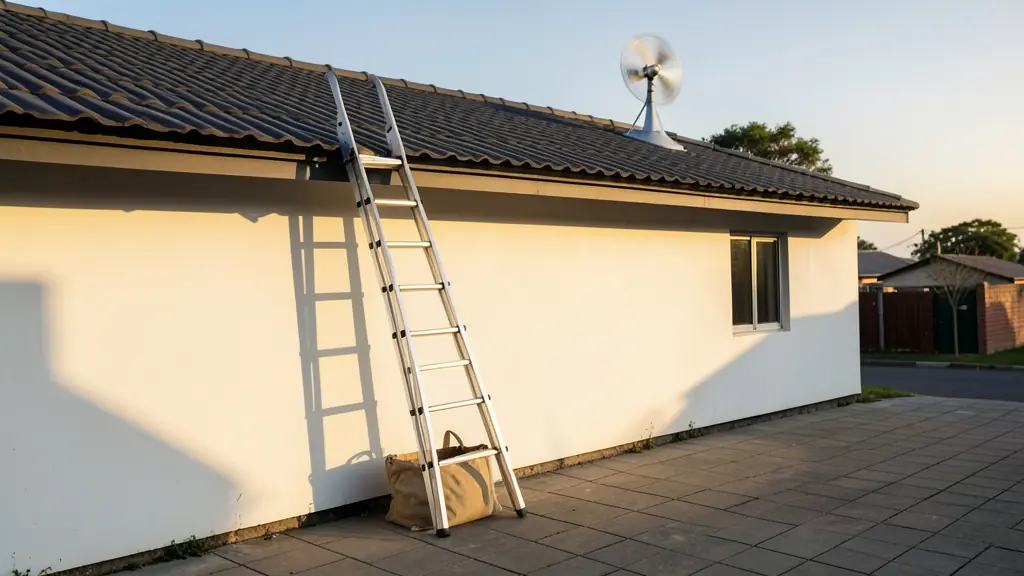
Roof ventilation installers come in several kinds, and the right one depends on the job. A roofer is the obvious choice for turbines and ridge vents through sheeting or tiles. A ventilation contractor designs and fits fan systems for factories and kitchens. A handyman may manage a small shed vent. An electrician wires any powered fan. What matters more than the title is whether they look at the whole path the air takes and leave the roof watertight.
Who does what
- Roofers cut, flash and seal turbines, vent tiles and ridge vents, and know which base suits IBR, corrugated or concrete tiles.
- Ventilation contractors size and fit powered systems for warehouses, kitchens and workshops, often with ducting.
- Electricians wire roof and extractor fans, thermostats and controllers, and issue a CoC for the fixed wiring.
- Handymen suit small, low jobs such as a vent in a wendy house, not a double storey roof.
What a good installer checks before quoting
- Intake: are there eave or soffit vents, and are they blocked by insulation?
- The roof covering, its pitch and condition, and whether old sheets might be asbestos cement.
- What is already up there: the geyser, solar panels, a satellite dish, existing vents or fans.
- Where the bathroom and kitchen extractors discharge.
- Safe access, and whether the ceiling can be walked on (usually it cannot).
Someone who quotes a number of turbines over the phone without asking any of this is guessing. Check the count yourself with the whirlybird calculator.
Questions to ask
How many have you fitted on a roof like mine? Which base and flashing will you use, and which sealant? What guarantee do you give against leaks, and for how long? Do you carry public liability insurance, and how do your people work safely at height? Will you send photos before and after? On a factory or school, ask how they meet the Construction Regulations for work at height. A trustee in a Bryanston complex should also ask who signs off the work for the body corporate, and an installer in a coastal town such as Port Shepstone should say which metal will last in salt air.
What to get in writing
Before you accept, read the quote for these lines. A written quote should name the vent type, size and metal, the base for your covering, the flashing, the sealant, the eave vents, labour, access equipment and removal of any old units. Compare quotes on those lines; see roof ventilator prices. An estate or body corporate may want the specification approved before work starts.
What to put in your request
- Say what you want fitted, or that you need advice
- Give the roof covering, pitch and storeys
- Mention the geyser, solar panels and old vents
- Ask for a site visit before the price
- Ask for a leak guarantee in writing
Roof Ventilation Installers: who asks for them and why
- Homeowners and DIY: finding someone to fit turbines and eave vents on a hot double storey roof
- Roofers and roofing contractors: taking on ventilation work alongside reroofs and repairs in the area
- Builders, developers and architects: lining up a roofer and an electrician for vents and fans on a new build
- Factories, warehouses and workshops: a ventilation contractor with access equipment for a large steel roof
- Offices, shops, restaurants and gyms: an installer who can work after hours on a shop or restaurant roof
- Farms, poultry houses and packsheds: a contractor willing to travel to a district far from the nearest metro
- Schools, clinics, churches and halls: an insured contractor who meets safety rules on a school or clinic roof
- Landlords, body corporates and estate managers: one installer approved by the body corporate for every unit in the complex