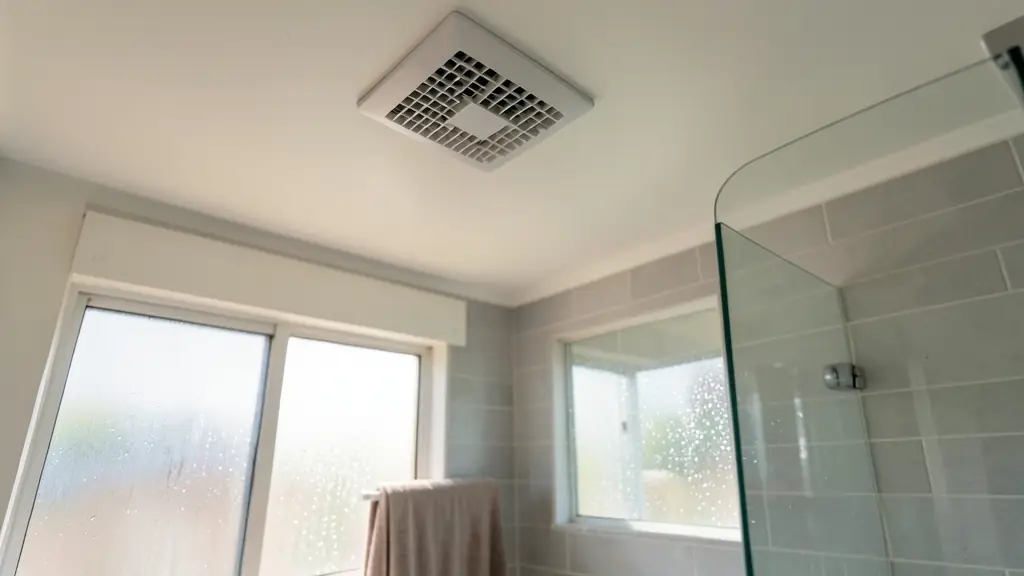
A bathroom extractor fan pulls steam out of a bathroom or toilet and sends it along a duct to the outside, through the roof or an outside wall. Black spots on the ceiling above the shower, peeling paint and a mirror that stays fogged for half an hour are the usual signs that one is missing or not working. In humid KZN a fan can be the difference between a clean ceiling and repainting every year. Here is how to choose, place and duct one properly.
When a bathroom needs a fan
The building regulations expect bathrooms and toilets to be ventilated. Where there is no window that opens to the outside, for example an en suite in the middle of a house, mechanical extraction is expected. Even with a window, many people never open it in winter, so a fan does the work. Ask the supplier or the electrician to confirm what applies to your room.
Ceiling or wall, and how much air
- Ceiling fans sit above or near the shower, where the steam rises, and duct up through the roof space to the outside.
- Wall fans go through an outside wall, high up and opposite the door, with a short duct and a louvred grille outside.
Bathrooms are usually given about 6 to 10 air changes an hour. Multiply the room volume by that and you have the airflow to ask for in m³/h. A fan rated a bit higher makes up for the duct. The extractor fan size calculator does the sum and suggests a duct size. Leave a gap under the door so replacement air can get in.
Duct it out, never into the roof
The most common mistake is a ceiling fan that blows into the ceiling void and stops there. The warm wet air hits the cold roof sheets, condenses and drips back onto the ceiling boards, the very mould you were trying to stop. Run the duct to a roof vent cap with a backdraft flap, a pipe vent tile, or an eave or soffit outlet, and keep it short with a gentle fall so water does not pool. The roof condensation page shows what happens when this goes wrong.
Controls, noise and wiring
A fan wired to the light switch with a run on timer keeps going for a few minutes after you leave. A humidistat starts it when the air is damp, which helps in a guest bathroom. Quiet fans with a low sound rating suit en suites next to bedrooms. Any new circuit or switch is fixed wiring: book a registered electrician, and keep the CoC with your house papers.
What to put in your request
- Give the bathroom size and ceiling height
- Say if the room has an opening window
- Describe the roof covering above it
- Say whether a fan is there now
- Ask for the duct and outlet in the price
Bathroom Extractor Fans: who asks for them and why
- Homeowners and DIY: an en suite with no window and black mould spreading across the ceiling boards
- Roofers and roofing contractors: fitting a cap or vent tile for a bathroom fan duct during a reroof or repair
- Builders, developers and architects: fans, ducts and roof outlets planned into every inside bathroom on a new build
- Factories, warehouses and workshops: change room and ablution block fans for shift workers at a plant or mine
- Offices, shops, restaurants and gyms: toilets in an office, restaurant or gym that must be extracted to the outside
- Farms, poultry houses and packsheds: staff ablutions and a farmhouse bathroom with a damp ceiling and no ducting
- Schools, clinics, churches and halls: school, clinic and hall toilets where windows stay shut and fans run all day
- Landlords, body corporates and estate managers: replacing fans that dump steam into the roof across a whole townhouse complex