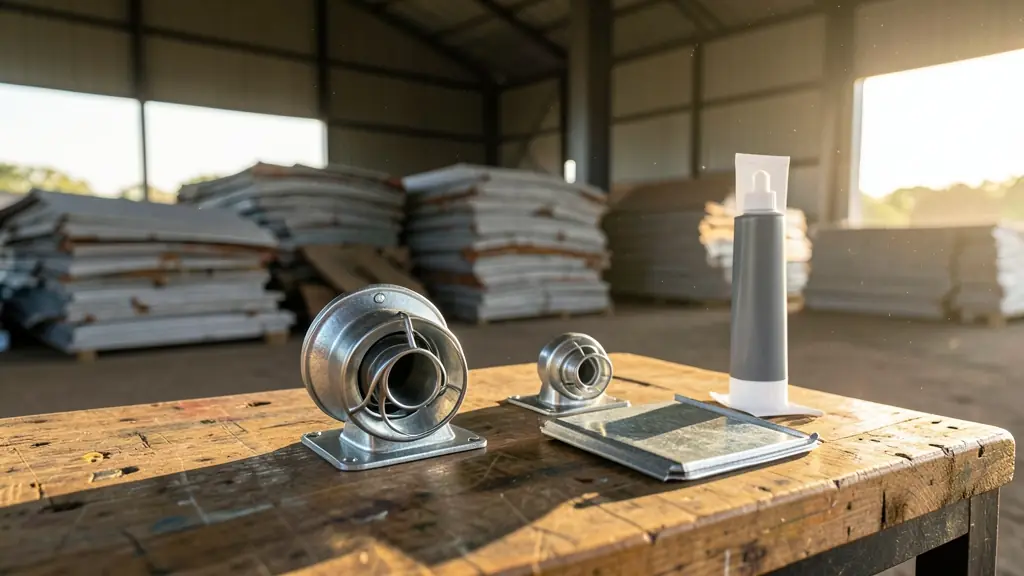
A whirlybird price on its own tells you little. The head is often the smallest line on a ventilation quote once you add the base that suits your roof, the flashing, the sealant, eave vents for intake, labour at height and delivery. Two quotes for "four turbines" can differ widely because one includes the intake and a proper base for concrete tiles and the other does not. This page walks through what moves the number, so you can read a quote line by line and compare like with like.
The things that set the price
- Size. Heads are named by throat diameter. A 300 mm house unit and a 600 mm factory unit are different products, and the bigger one needs a bigger hole, a heavier base and more time. See turbine ventilator sizes.
- Metal. Galvanised steel is the usual starting point; aluminium and stainless cost more and last longer near the sea or over fumes.
- Base and flashing. Often sold separately. A base cut for IBR, one for corrugated and a soft flashing for tiles are not interchangeable.
- How many. Count first with the whirlybird calculator, then price.
- Intake. Eave or soffit vents are part of the job, not an optional extra.
Labour, access and the roof itself
Fitting on a single storey IBR roof in Centurion is quick work. A double storey in Constantia with steep clay tiles takes longer, because tiles have to be lifted, cut around and bedded back, and the roofer needs safe access. On a warehouse in Isando the quote may carry a line for scaffolding or a cherry picker that is bigger than the turbines. A powered fan adds an electrician, who wires it and issues a CoC. Delivery outside a metro, say to a farm near Lichtenburg, is often extra.
Supply only or supply and fit
Buying heads at a hardware store and fitting them yourself saves the labour line, but you carry the risk of a leak, a crooked head or a fall. Supply and fit puts the base, flashing and sealing on the installer, and a decent one guarantees the job against leaks for a stated period. If you go supply only, buy the base and flashing that match your sheet profile at the same time.
Reading two quotes side by side
- Check the size, metal and number of heads match.
- Look for the base type and the flashing named per roof covering.
- See whether eave vents are counted, and how many.
- Find the access line: ladders, scaffold or a lift.
- Ask what the leak guarantee covers and for how long.
A rough budget from published prices is in the ventilation cost estimator.
What to put in your request
- Say supply only or supply and fit
- Give the roof covering and the pitch
- Say single or double storey, or shed height
- Ask for base, flashing and sealant as lines
- Ask for eave intake vents to be counted
Roof Ventilator Prices: who asks for them and why
- Homeowners and DIY: budgeting turbines and eave vents for a hot roof space before calling anyone out
- Roofers and roofing contractors: pricing ventilators into a reroof with the bases and flashing as separate lines
- Builders, developers and architects: costing ventilation on a new house plan so it is not cut at the end
- Factories, warehouses and workshops: weighing scaffold, a lift and heavy duty heads against the airflow a plant needs
- Offices, shops, restaurants and gyms: comparing quotes for a shop or gym roof where access is after hours
- Farms, poultry houses and packsheds: adding delivery and travel to a quote for a shed far from a metro
- Schools, clinics, churches and halls: drawing up a clear line item quote for a school or clinic tender
- Landlords, body corporates and estate managers: pricing one specification across many units so every owner pays the same