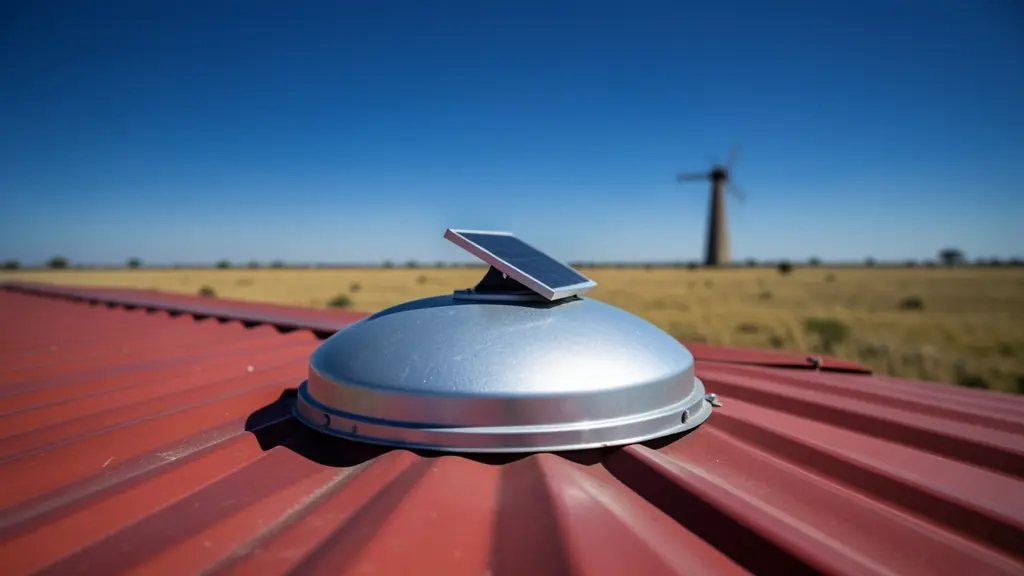
Solar roof vents are roof ventilators with a small solar panel on the hood or beside it that drives a DC fan underneath. There is no cable from the distribution board, so no electrician for the fan and no worry about load shedding. The sun that heats the roof also powers the fan, so it works hardest at two in the afternoon and stops after dark. Here is where a solar ventilator earns its place, how to site it and what tends to wear out.
How a solar ventilator works
The panel feeds a low voltage motor directly. More sun means more speed, so airflow climbs through the morning, peaks around midday and fades with the light. Some models add a small battery that keeps the fan turning for an hour or two after sunset, and some have a thermostat that holds the fan off on cool mornings. A few heads combine a turbine with a solar fan, often sold as a solar whirlybird, which spins in the wind and gets a push from the motor when the air is still.
Siting: north, high and out of shade
In South Africa the sun runs across the northern sky, so a panel facing north gets the most hours. On a tile roof that slopes east and west the panel on many models can be tilted or mounted separately on a short lead. Then check the shade: a double storey next door, a big tree, a satellite dish or your own geyser solar panels can cut the output for half the day. Put the head high on the roof, near the ridge, with eave vents low down to feed it. Use the roof vent area calculator to size the intake.
Against a turbine or a mains fan
- A whirlybird runs day and night but only as fast as the wind, so its output drops on a still afternoon.
- A mains roof fan moves more air and runs on demand, but needs wiring and stops in load shedding.
- A solar unit sits between them: modest airflow, no running cost, and it peaks when the heat does.
On a big roof one small solar fan will not do much; two or three, or a mains unit, may be needed.
What fails, and the warranty
The motor is the part that wears: brushes or bearings give up after years of dust and heat. Panels lose some output over time, and hail can crack the glass. Ask how long the warranty lasts on the motor and the panel separately, whether the motor can be replaced without lifting the whole unit, and what the maker's data sheet says about airflow at full sun.
What to put in your request
- Say which way the roof slopes face
- Mention trees, a double storey or panels nearby
- Give the roof covering and the footprint
- Say if you want a battery or thermostat model
- Ask for the motor warranty in writing
Solar Roof Ventilators: who asks for them and why
- Homeowners and DIY: a ventilator on the hot northern slope of a house roof with no new wiring
- Roofers and roofing contractors: adding solar heads on a reroof where the client does not want an electrician on site
- Builders, developers and architects: a low running cost option for show houses and cottages on a new estate
- Factories, warehouses and workshops: small solar heads on a guardhouse, a store room or a pump house in the yard
- Offices, shops, restaurants and gyms: cooling the roof of a small shop or a carport with no spare circuit in the board
- Farms, poultry houses and packsheds: an outbuilding, a tack room or a seed store far from the farmhouse power supply
- Schools, clinics, churches and halls: a school storeroom or a clinic outbuilding that keeps running through load shedding
- Landlords, body corporates and estate managers: a uniform solar head on every garage block in a complex, no wiring per unit