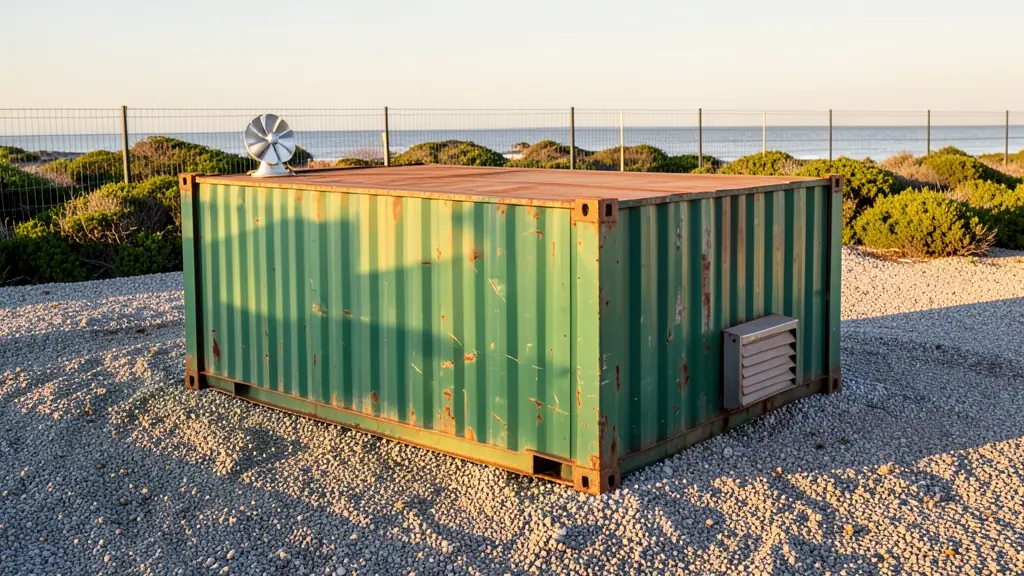
Shipping container roof vents and shed vents solve the same problem: a sealed steel or timber box that bakes by day and sweats by night. Leave a container closed on a Highveld site through June and the inside of the roof drips onto whatever you stored, from cement bags to a filing cabinet. A garden shed in Durban grows mould on the tools. A pair of vents, one low and one high, lets the damp air out before it settles. Suppliers sell them for containers, site offices, sheds, wendy houses, workshops and garages.
Why a steel box sweats
Steel loses heat fast after sunset. The warm, moist air trapped inside meets a roof that is now colder than the dew point, and water forms on the underside. People breathing, a kettle in a site office, wet tools and fresh timber all add moisture. Without a way out, the same air cycles every night, and you find rust spots, swollen chipboard and mouldy boxes. Insulating the roof helps, but only moving air takes the moisture away. The roof condensation page goes deeper.
The vent types that suit small roofs
- Louvre vents in the container wall, low down at one end, let air in and keep rain out with angled slats and mesh behind.
- Mushroom vents on the roof, a short pipe under a round domed cap, are cheap, have no moving parts and suit a still yard.
- Small turbines of about 150 mm throat pull more air when there is a breeze. See whirlybird roof ventilators.
- Solar fans run when the sun heats the box, with no wiring. See solar roof ventilators.
Put the intake low at one end and the exhaust high at the other, so the air crosses the whole space.
Cutting steel without starting rust
A container roof is thin corrugated steel with a coating that keeps it alive. Cut the hole with a hole saw or a nibbler, not an angle grinder that throws hot sparks onto the paint and leaves a burnt edge. File off the burr, sweep up every steel filing (they rust into brown stains overnight), then prime the raw edge with a zinc rich primer before the vent goes on. Bed the flange in a roof sealant and fix it with stainless rivets or self drilling screws with washers.
Security and the size of the hole
A container is often a store for tools and copper, so no vent should leave a hole a person could reach or climb through. Keep each opening small, fit steel mesh or bars behind louvres, and choose vents fixed from the inside where you can. Two or three small vents beat one big one for security and for airflow. The roof vent area calculator gives a rough vent area for the floor size.
What to put in your request
- Give the container or shed length and its use
- Say if it is steel, timber or fibre cement
- Say whether people work inside or it is storage
- Mention any power for a fan, or solar only
- Note security needs: mesh, bars, inside fixing
Container and Shed Vents: who asks for them and why
- Homeowners and DIY: a garden shed, wendy house or garage that smells damp and rusts the tools inside
- Roofers and roofing contractors: small add on jobs fitting vents to outbuildings while already on site for a house roof
- Builders, developers and architects: site offices and lockable stores that sweat on cold mornings and spoil cement and paperwork
- Factories, warehouses and workshops: containers used as stores, workshops or plant rooms beside a factory or on a mine
- Offices, shops, restaurants and gyms: container shops, coffee kiosks and pop up offices that get stuffy and hot by noon
- Farms, poultry houses and packsheds: feed, fertiliser and tool stores in containers or sheds where damp spoils bags
- Schools, clinics, churches and halls: school storerooms and clinic containers holding sports kit, files or supplies
- Landlords, body corporates and estate managers: guardhouses, bin stores and maintenance sheds in a complex or a business park
Frequently asked questions
How many vents does a 6 m container need?
Can I put a whirlybird on a shipping container?
Will vents stop my wendy house from going mouldy?
Who will quote me, and do you fit vents?
Work it out first
- Roof vent area calculatorCeiling area in, the net free vent area and the eave and high vents to fit out
- Whirlybird calculatorRoof size and turbine size in, how many whirlybirds and the eave intake out
- Air changes calculatorBuilding size and use in, the airflow in m³/h and how many fans or turbines out