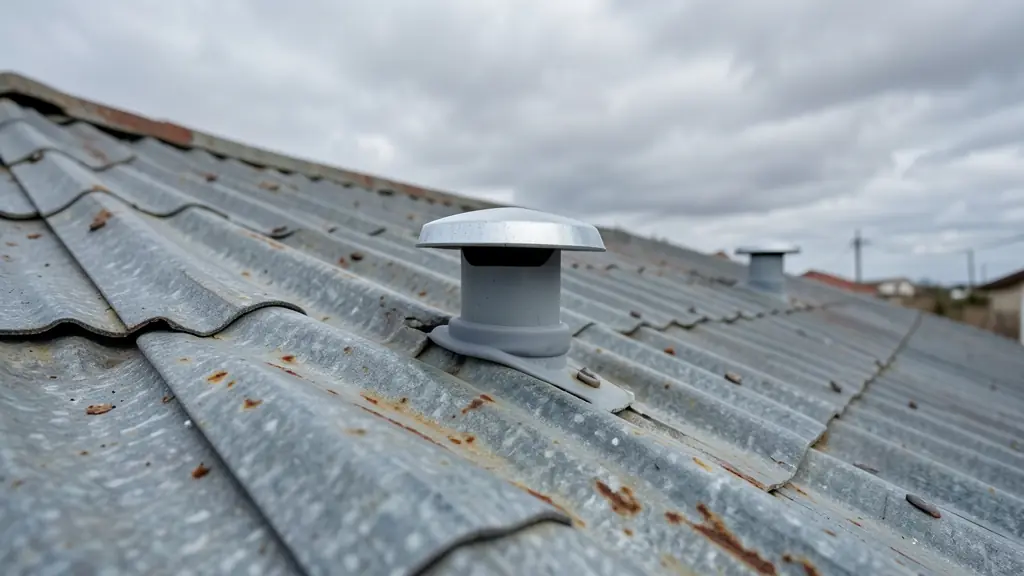
A roof vent cap is the cover on top of a pipe or duct where it comes out through the roof. It lets air or steam out while keeping rain, leaves and birds from getting in. It may be a simple rain cap on a soil vent pipe, a mushroom vent on a shed, a hood with a flap on a fan duct, or a turning cowl on a chimney. When a cap cracks or blows off, water runs straight down the pipe and the stain shows on the ceiling.
The common caps and cowls
- Soil vent pipe caps: a grille or a domed cap on the drainage vent pipe, which must stay open so the drains can breathe.
- Rain caps and mushroom vents: a flat or rounded hood with an open gap under it, used on ducts, sheds and containers.
- Backdraft flap caps: a hood with a light flap that opens when a fan runs and drops shut when it stops, so wind and cold do not blow back down a kitchen or bathroom duct.
- Rotating and fixed cowls for chimneys and flues, which help the draught and keep rain off the fire.
Size it to the pipe
A cap fits the outside diameter of the pipe, so measure it rather than guessing. Drain vent pipes are often 50 or 110 mm, fan ducts commonly 100, 125 or 150 mm. A cap that is too small is forced on and splits in the sun, one that is too big rattles loose in wind. The extractor fan size calculator gives the usual duct size for a fan, and the cap follows it.
Mesh, birds and blockages
Pigeons, mynas and sparrows nest in open pipe ends, and a blocked soil vent can make drains gurgle and smell. A cap with a mesh guard prevents it. On a fan duct use mesh coarse enough not to clog with grease or fluff, and clean it once a year. Never use a cap that seals the pipe shut.
Flues are a separate job
A gas heater, a gas geyser or a fireplace flue has its own rules for the terminal on top. In general terms, a gas appliance flue is work for a registered gas installer and a chimney cowl should match what the appliance maker allows. If water is getting in round the base rather than through the top, see roof vent leaks, since the flashing may be the problem, not the cap.
What to put in your request
- Measure the outside diameter of each pipe
- Say what the pipe carries: drain, fan, flue
- Name the roof covering round the pipe
- Send a photo of the old or broken cap
- Say if a gas appliance uses the pipe
Roof Vent Caps: who asks for them and why
- Homeowners and DIY: a new cap on a cracked soil vent pipe that lets rain drip onto the ceiling
- Roofers and roofing contractors: fitting caps and flashings to every pipe that comes through a new roof
- Builders, developers and architects: ordering caps for the drainage vents and fan ducts on a new house
- Factories, warehouses and workshops: cowls and rain hoods on the exhaust ducts of a workshop or plant room
- Offices, shops, restaurants and gyms: backdraft flap caps on restaurant and salon extraction ducts
- Farms, poultry houses and packsheds: mushroom vents on stores and sheds and caps on farmhouse chimneys
- Schools, clinics, churches and halls: replacing broken pipe caps across the roofs of a school or clinic
- Landlords, body corporates and estate managers: bird mesh caps on soil vent pipes across a complex after a nesting season