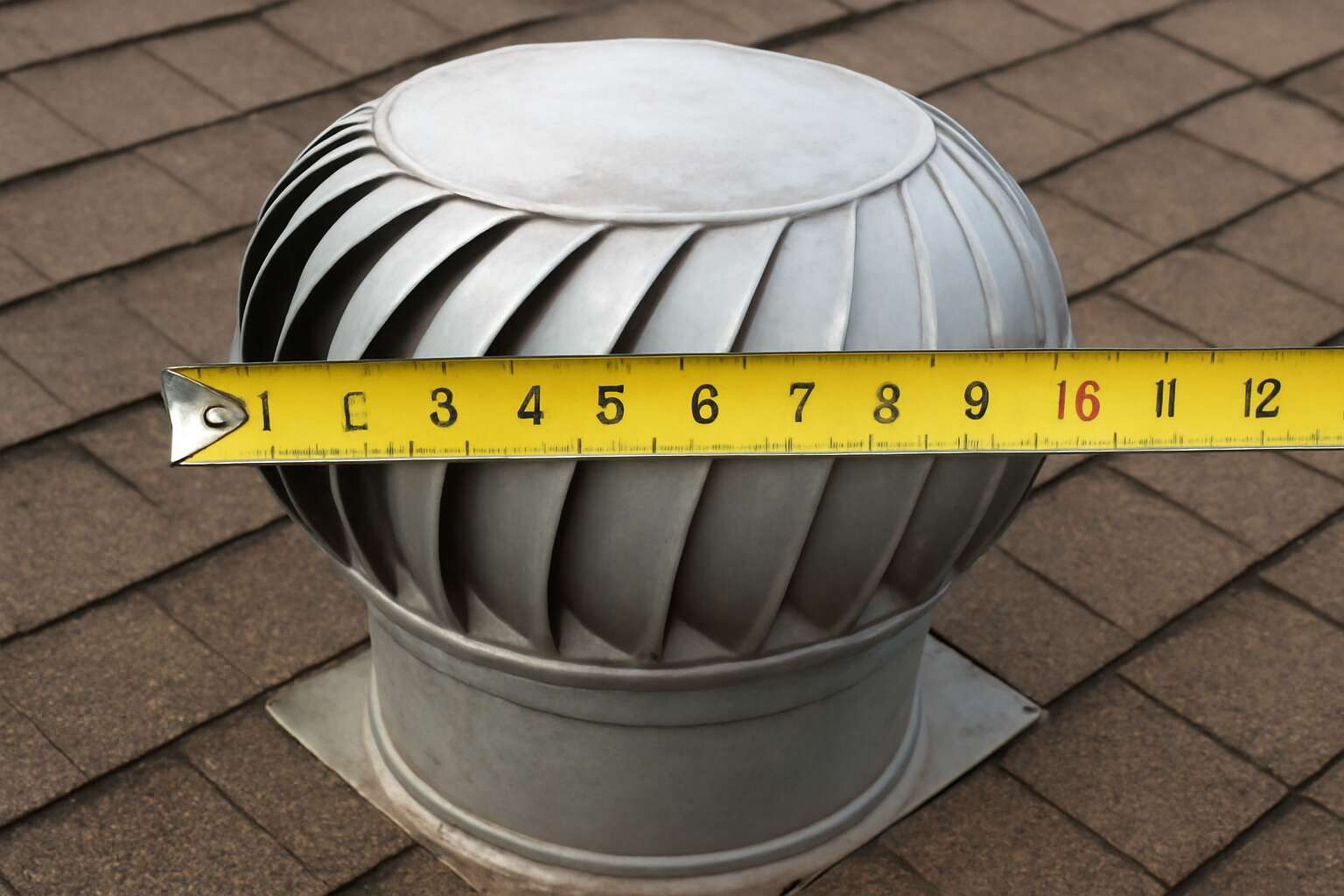
Understanding Whirlybird Roof Vents and Measurement Basics
What is a whirlybird roof vent and how does it function?
Fresh air is a small miracle perched on the ridge. Understanding Whirlybird Roof Vents and Measurement Basics begins with a breath of wind—the right vent turns heat into hush and movement. In practical terms, how to measure a whirlybird roof vent is a tidy ritual you can perform with a tape and a calm gaze!
These vents are turbine cores—no motor, just wind turning a cap to pull hot air from the attic. They work with the physics of pressure and flow, quietly ferrying heat outdoors while cool air slips in through gaps and eaves.
On South African rooftops, measurements stay practical. In the realm of replacement, the outer diameter of the cap and the mounting hole on the roof are the anchors of compatibility, while the overall height defines the silhouette against the ridge. This trio of numbers guides a confident match and a smooth, unbroken breeze.
Why accurate measurement matters for installation and performance
South Africa’s rooftop summers push attic temps into the red, and a tiny vent becomes a silent referee of comfort. Understanding how air moves across a roof is one thing; measuring that system accurately is another. When asking how to measure a whirlybird roof vent, consider three dimensions that define fit and flow: the outer cap diameter, the mounting hole, and the overall height. This trio anchors compatibility and ensures the breeze travels where it should, without leaking heat back into the attic.
Precision matters because the wrong size disrupts the balance between intake and exhaust, dulling performance and inviting strain on insulation. The cap diameter governs how air enters, the mounting hole aligns with roof penetrations, and the overall height shapes the vent’s silhouette along the ridge and its exposure to gusts. On South African rooftops, those numbers translate into reliability and steadier summers.
Measured clearly, airflow behaves more predictably, keeping the attic cooler and living spaces steadier. In this climate, measurement basics become the quiet backbone of installation and performance across diverse homes.
Common sizes and standard dimensions for whirlybird vents
South Africa’s rooftop summers push attic temps into the red, turning a quiet vent into a silent guardian of comfort. In the glare, a properly sized whirlybird keeps air moving and the house livable. If you’re wondering how to measure a whirlybird roof vent, you start with the three essentials that define fit and flow: cap diameter, mounting hole, and overall height.
- Outer cap diameter
- Mounting hole size and alignment
- Overall height along the ridge
Common sizes span practical ranges for SA homes, with cap diameters typically 300 to 350 mm and heights tuned to rise just enough to catch breeze without catching gale-force gusts. The mounting hole aligns with roof penetrations to seal against leaks. Measured correctly, these three figures anchor performance and reliability across diverse roofs.
How measurement affects airflow, efficiency, and weather sealing
A rooftop vent is a quiet guardian of comfort, yet its true performance blooms only when measurement is exact. In South Africa’s blistering summers, attic temps can climb 10–15°C above outside air, and airflow must move freely while seals hold firm, or heat lingers like a stubborn shadow. Understanding how to measure a whirlybird roof vent unlocks efficiency and keeps roofs dry under the sun.
Understanding measurement basics means recognizing how the three critical dimensions influence flow, noise, and weather-tightness. When dimensions align with the roof’s slope and climate, airflow stays consistent and leaks stay at bay.
Consider these essentials as you assess a vent’s fit:
- Cap diameter and its effect on the air path
- Mounting hole alignment for a true seal
- Overall height to catch the breeze without binding gusts
In practice, accurate checks translate to calmer attics and cooler living spaces. The rhythm of measured precision and persistent performance hums softly across the tiles.
Safety prerequisites before measuring on a roof
South Africa’s roofs soak up the sun, and a good whirlybird vent should protect the attic without inviting trouble! Understanding measurement basics starts with safety and a calm mind: you can’t compare airflow if you’re not standing on a solid foundation. For readers curious how to measure a whirlybird roof vent, safety must come first—and a careful assessment of conditions pays off in the long run.
- Companion or spotter to keep an eye on conditions and assist
- Fall protection and appropriate PPE
- Dry, stable roof surface and good weather
- Clear communication and a plan
With safety in check, measurement basics become a quiet, practical exercise—no drama, just precise alignment of fit and function on the roof. The goal is a calm attic and steady performance under the Gauteng sun, and that starts with preparedness more than bravado!
Tools, Safety, and Prep for Measuring a Whirlybird Roof Vent
Essential measuring tools for precision (tape measure, calipers, etc.)
For how to measure a whirlybird roof vent, precision starts with a tuned toolkit. Essential measuring tools for precision: a metric tape up to 5 meters, calipers for diameter, a steel ruler, a laser distance meter, and a pencil plus notepad to capture notes.
- Measuring tape (metric and imperial)
- Calipers for diameter accuracy
- Steel ruler or folding rule
- Laser distance meter for quick gaps
- Pencil and notepad for notes
Safety on SA roofs is non-negotiable. Wear slip-resistant boots, secure your harness on exposed edges, and stay alert to wind and sun. Don’t rush—the roof rewards a calm approach.
Prep means a quick site survey, clearing debris, and confirming vent type and mounting footprint. Keep a clean surface for marking and protect finishes as you study the roof’s geometry for alignment.
Personal safety gear and rooftop precautions
A tuned toolkit sets the tone for precise measurement. This is how to measure a whirlybird roof vent with confidence. I pack these tools on every SA project, calm and ready: a metric tape up to five meters, calipers for diameter, a steel ruler, a laser distance meter, and a pencil with a notepad to capture notes—calm and ready!
- Metric tape up to 5 m
- Calipers for diameter
- Steel ruler
- Laser distance meter
- Pencil and notepad
Safety on SA roofs is non-negotiable. Wear slip-resistant boots, secure a harness on exposed edges, and stay vigilant for wind and sun. Don’t rush—the roof rewards a calm approach, especially when heat and glare are factors.
Prep means a quick site survey, clearing debris, and confirming vent type and mounting footprint. Keep a clean surface for marking and protect finishes as you study the roof’s geometry for alignment.
Preparing the roof and vent areas for measurement
Here’s how to measure a whirlybird roof vent with confidence. A calm toolkit keeps numbers true: a metric tape up to 5 m, calipers for diameter, a steel ruler, a laser distance meter, and a pencil with a notepad to capture notes—calm and ready!
Safety on South Africa’s roofs is non-negotiable. Wear slip-resistant boots, secure a harness on exposed edges, and stay vigilant for wind and glare. Don’t rush—the roof rewards a measured, patient pace that honours heat and sun.
Prep means a quick site survey, clearing debris, and confirming vent type and mounting footprint. Keep a clean surface for marking and protect finishes as you study the roof’s geometry for alignment.
Capturing photos and notes to improve accuracy
Tools in hand, you begin a quiet ritual of measurement. A metric tape to 5 m, calipers for diameter, a steel ruler, a laser distance meter, and a pencil with a notepad to capture notes—calm and ready. No guesswork here; this is how to measure a whirlybird roof vent with precision.
Safety on South Africa’s roofs is non-negotiable. Slip-resistant boots, a harness on exposed edges, and a watchful eye for gusts and glare keep the mind steady. Don’t rush—the roof rewards a measured, patient pace that honours heat and sun.
Prep means a quick site survey, clearing debris, and confirming vent type and mounting footprint. Keep a clean surface for marking and protect finishes as you study the roof’s geometry for alignment.
- Capture photos from multiple angles
- Mark measurements with protective tape
Accessing the vent safely on different roof types (slopes, tiles, metal)
Tools in hand, you approach how to measure a whirlybird roof vent with quiet confidence. A metric tape extends to 5 m, a steel ruler, and a laser distance meter keep measurements honest, while a notepad captures oddities in the mounting footprint. Accessing the vent safely starts with a clean, stable surface and clear sightlines, so you’re not chasing numbers later.
Safety on South Africa’s rooftops is non-negotiable. Slip-resistant boots and a harness for exposed edges form the baseline, with a sun-smart plan to manage glare and heat. Take your time; a deliberate, measured pace earns accuracy and keeps everyone safe.
Prep creates the space for clean measurements. Do a quick site survey, clear debris, and confirm vent type and mounting footprint. The surface should stay clear for marking, and the vent area should be ready for accurate alignment.
- Slopes: steady footholds, harness where required
- Tiles: avoid cracked edges and use safe stepping points
- Metal: mind reflections and protect finishes
Step-by-Step: How to Measure Diameter and Housing
Measuring the external diameter of the vent cap
In South Africa’s sun-baked towns, rooftop details matter as much as structure. how to measure a whirlybird roof vent is less about guesswork and more about clean data. Start with the vent cap’s external diameter—the widest width visible from above. The result informs whether the cap will seat squarely and how it will interplay with sealing and the roof’s slope.
- Place the vent on a stable surface or hold the cap steady; with a flexible tape, measure straight across the external diameter at its widest point. Record in millimetres or inches.
- Measure the housing diameter at the base where the vent meets the roof, across the opening, keeping the tape perpendicular to the roof.
- Cross-check both numbers against any manufacturer specifications or standard size charts to anticipate compatibility with flashing and seals.
Clear, consistent measurements turn a routine check into a reliable forecast for performance on SA roofs.
Measuring the internal duct opening and bore size
On South Africa’s sun-scorched roofs, a single misstep can ripple into leaks and wasted time—how to measure a whirlybird roof vent can set the tone for performance in the glare. As the veteran roofer says, “Measure once, seal forever.”
- Expose the interior bore by removing the cap to reveal the opening.
- Measure bore diameter with calipers or a flexible tape across the inside opening at its widest.
- Record the diameter in millimetres or inches to the nearest jot.
- If a sleeve or collar exists, measure the ID (internal diameter).
- Compare with manufacturer specs or standard bore sizes to assess compatibility.
Clear bore measurements translate into reliable sealing on SA roofs, turning a routine check into confident choices for flashing and venting.
Measuring the vent flange and mounting hole pattern
On South Africa’s sun-scorched rooftops, measurement feels like charting a minor epic. A precise read of scale and fit can turn a glinting vent into steady, leak-free performance.
- Identify the external vent flange diameter and note irregular edges.
- Map the mounting hole pattern openly, counting equal spacings.
- Record any sleeve, collar, or gasket interfaces that affect fit.
With the signals mapped, translate them into a housing picture—edge, hole pattern, and any adapters. In terms of how to measure a whirlybird roof vent, begin by noting the widest seam, then track the alignment toward the duct.
This steady narrative keeps attachments secure and airflow balanced, making roofwork feel a touch more winnable beneath the SA sky.
Accounting for any overhang, rain hood, or hood extensions
Across South Africa’s sun-scorched roofs, weatherproofing wins or loses on a single seam. On SA rooftops, about 60% of leaks trace back to a mis-measured vent. If you’ve ever asked how to measure a whirlybird roof vent, you’ll want patience and a steady tape measure, not bravado. Start by labeling the widest seam and the housing footprint—the edge where the cap meets the wind.
- Measure the external diameter of the vent cap across the widest point with a tape or calipers.
- Include overhang, rain hood, or hood extensions by noting the farthest reach beyond the flange.
- Map the housing interface where sleeves or adapters sit to ensure the fit behind trim and flashing.
With those signals mapped, translate them into a housing picture—edge, hole pattern, and any adapters—so attachments stay secure and airflow stays balanced, even on a blistering SA afternoon.
Record-keeping and unit conversions for accuracy
South Africa’s sun has a dry sense of humor, and leaks love a mis-measured vent more than a stale joke loves a pun. Patience trumps bravado when you’re balancing a tape measure on a windy roof. If you’re wondering how to measure a whirlybird roof vent, this approach keeps the numbers honest and the airflow singing.
Step-by-step, here’s the clockwork sequence to lock in diameter and housing details:
- Measure the cap’s widest external diameter with tape or calipers.
- Note any overhang, rain hood, or hood extensions beyond the flange.
- Map the housing interface where sleeves or adapters sit behind trim and flashing.
- Log the data in both imperial and metric units and check for consistency.
Record-keeping and unit conversions for accuracy matter. Jot dates, roof section, and conversion factors so measurements stay clear when the afternoon heat returns. That discipline keeps attachments secure and airflow balanced, even on a blistering SA day.
Measuring for Replacement or Compatibility
Determining if you need a direct replacement or a universal vent
In the realm of roof vent alchemy, choosing between a direct replacement and a universal vent demands a watchful eye on how the openings align. A perfect match saves labor, seals, and airflow destiny. Consider the bore size, flange pattern, and mounting symmetry—the trifecta that can turn a mismatch into a quiet catastrophe or a chorus from the attic.
- Bore size and duct alignment with the stack
- Flange footprint that sits square on the roof
- Compatibility with rain hood and overhang extensions
If you’re wondering how to measure a whirlybird roof vent, you’re really weighing fit, longevity, and weather sealing. Document the specs and compare with manufacturer options to decide between a direct replacement and a universal vent with adapters.
Calculating required inlet dimensions for replacement
In roof work, precision is a discipline, not a whim. how to measure a whirlybird roof vent is more than inches—it’s about whether openings cradle airflow or invite moisture. I’ve learned that alignment determines the attic’s quiet life; a small misfit becomes a chorus of creaks and leaks on windy days!
To weigh replacement versus compatibility, compare the inlet dimensions against the candidate unit. Focus on bore size, flange footprint, and mounting symmetry, plus the rain hood or hood extensions that may ride along. Consider these checkpoints:
- bore size alignment with the duct
- flange footprint and mounting hole pattern
- rain hood and overhang extension compatibility
Document measurements with photos and notes; a quiet record of facts yields a durable fit rather than a costly gamble with weather.
Understanding mounting hardware and screw patterns
That moment you need a replacement reveals that how to measure a whirlybird roof vent is about clarity, not guesswork. This is how to measure a whirlybird roof vent—focusing on the mounting system and the housing’s silhouette against the rafters. In South Africa’s wind-prone roofs, a millimetre can decide whether air flows freely or a drop of moisture finds a path inside; a whisper of the unseen often accompanies the trim of metal.
Compatibility evaluation centers on matching the vent’s mounting hardware and screw pattern with the existing roof hardware, including any overhang or rain hood that could ride along. Documentation with photos and notes preserves a quiet, factual record, yielding a durable fit rather than a costly gamble with weather.
Assessing roof pitch, deck thickness, and compatibility
On South Africa’s wind-prone roofs, a millimetre can decide whether air flows freely or moisture slips in. One roofer’s quip sticks: “If it doesn’t fit, it leaks.” If you’re wondering how to measure a whirlybird roof vent, start with the roof pitch and deck thickness—the two biggest factors for compatibility. The aim is a quiet, weather-tight fit, not guesswork stirred by gusts.
To frame compatibility without turning measurement into a scavenger hunt, consider these aspects:
- Vent flange diameter and mounting hole pattern
- Overhang, rain hood, and any hood extensions
- Rafter spacing and deck material compatibility
Documenting measurements with photos and notes keeps your analysis crisp and helps decide if a direct replacement or a universal vent is the right path.
Choosing the right size for airflow and attenuation requirements
On South Africa’s wind-lashed roofs, a vent can shift from silent to whistle in moments. Up-to-date studies suggest airflow efficiency dips when the aperture and cap size misalign, a risk no roofer wants. This is a primer on how to measure a whirlybird roof vent to ensure a quiet, weather-tight result.
- External collar fit and mounting pattern
- Rain hood and extensions catching wind and water
- Rafter spacing and deck material compatibility
Documenting measurements with photos and notes so decisions about direct replacement or a universal vent feel deliberate rather than rushed. The goal is harmonious airflow and attenuation, not guesswork stirred by gusts.
Common Mistakes and Tips for Accurate Measurement
Avoiding overestimation of vent diameter
Common mistakes creep in when the vent is treated as a single diameter. People often overestimate by including the rain hood or flange in the measurement, or they grab a rough guess from the cap. Learn how to measure a whirlybird roof vent by focusing on the bore size and mounting holes, not the cap.
- Ignore the cap and measure the actual bore or duct opening with calipers or a tape.
- Include the mounting flange thickness and any hood extensions in the setup, but measure separately from the bore.
- Take several measurements around the circle and snap clear photos to compare later.
Consistency is the quiet anchor of a precise, reliable install. By pairing careful bore measurements with a mindful check of flange and hood extensions, you avoid overestimating vent diameter and keep fittings true for long-term performance.
Measuring in multiple locations to confirm consistency
When chasing precision, the biggest folly is treating a whirlybird vent as one uniform diameter. If you’re wondering how to measure a whirlybird roof vent, the answer is to respect bore size and the separate flange, not the cap. Consistency wins over hero shots on the roof, especially in SA’s sun and showers.
- Relying on the cap or guessing its size rather than measuring the bore
- Ignoring the mounting flange thickness and hood extensions in a separate check
- Taking a single measurement and assuming it represents the whole circle
Take several measurements around the circle and snap clear photos to compare later. That habit helps you confirm consistency across the bore, flange, and hood extensions, a small detail with outsized impact on fit and weather sealing.
Double-checking measurements against manufacturer specs
Circling back to precision, the biggest folly is treating a whirlybird as a single diameter. If you’re wondering how to measure a whirlybird roof vent, focus on bore size and the separate flange—the cap is not the dimension that seals your roof. In SA’s sun and showers, consistency beats dramatic rooftop shots every time.
Common mistakes to watch for include:
- Relying on the cap size rather than bore and flange measurements.
- Overlooking flange thickness and hood extensions in a separate check.
- Assuming a single measurement represents the entire circle.
Tips for accuracy emphasize aligning with manufacturer specs and keeping a careful record of measurements and photos for later comparison. This practice supports reliable replacements and weather sealing across SA homes.
Documenting measurements for contractors and installers
Common mistakes creep in when someone treats a whirlybird as a single diameter prop. Relying on cap size alone? That’s the rookie trap. The vent comprises bore, flange, and hood extensions—each part matters. In SA’s sun and showers, precision beats flashy rooftop heroics.
Tips for accuracy hinge on documentation and context. When people ask how to measure a whirlybird roof vent, the real win is a tidy record rather than one number.
- Record measurements with notes and date
- Attach photos showing the vent in context
This approach gives contractors a clear trail for replacements and weather sealing across SA homes. Practical, a bit nerdy, and oddly satisfying when the details add up.
When to call a professional for complex roofs or uncertain measurements
Here’s a punchy truth: how to measure a whirlybird roof vent isn’t about one number, it’s about the whole assembly—bore, flange, and hood extensions. In SA’s sun and showers, missteps creep in when you treat the vent as a single diameter prop. Precision keeps weather sealing honest and airflow predictable.
- Treating the vent as one size instead of accounting for bore, flange, and hood extensions.
- Relying on cap size alone to judge fit.
- Forgetting how wind and rain can alter openings over time.
- Underestimating roof complexity—tiles, slopes, and edge details.
Tips for accuracy hinge on context as much as clerical precision. Photograph the vent in situ, note roof slope, and cross-check against manufacturer specs. Take measurements at several points around the footprint to confirm consistency and flag distortion before sealing up.
When to call a professional? Complex roofs, steep pitches, or uncertain measurements merit expert eyes. If access is awkward or you’re unsure about the vent type, a roofer can ensure correct sizing and weather sealing.
- Unusual roof geometry
- Difficulty accessing the vent safely

0 Comments