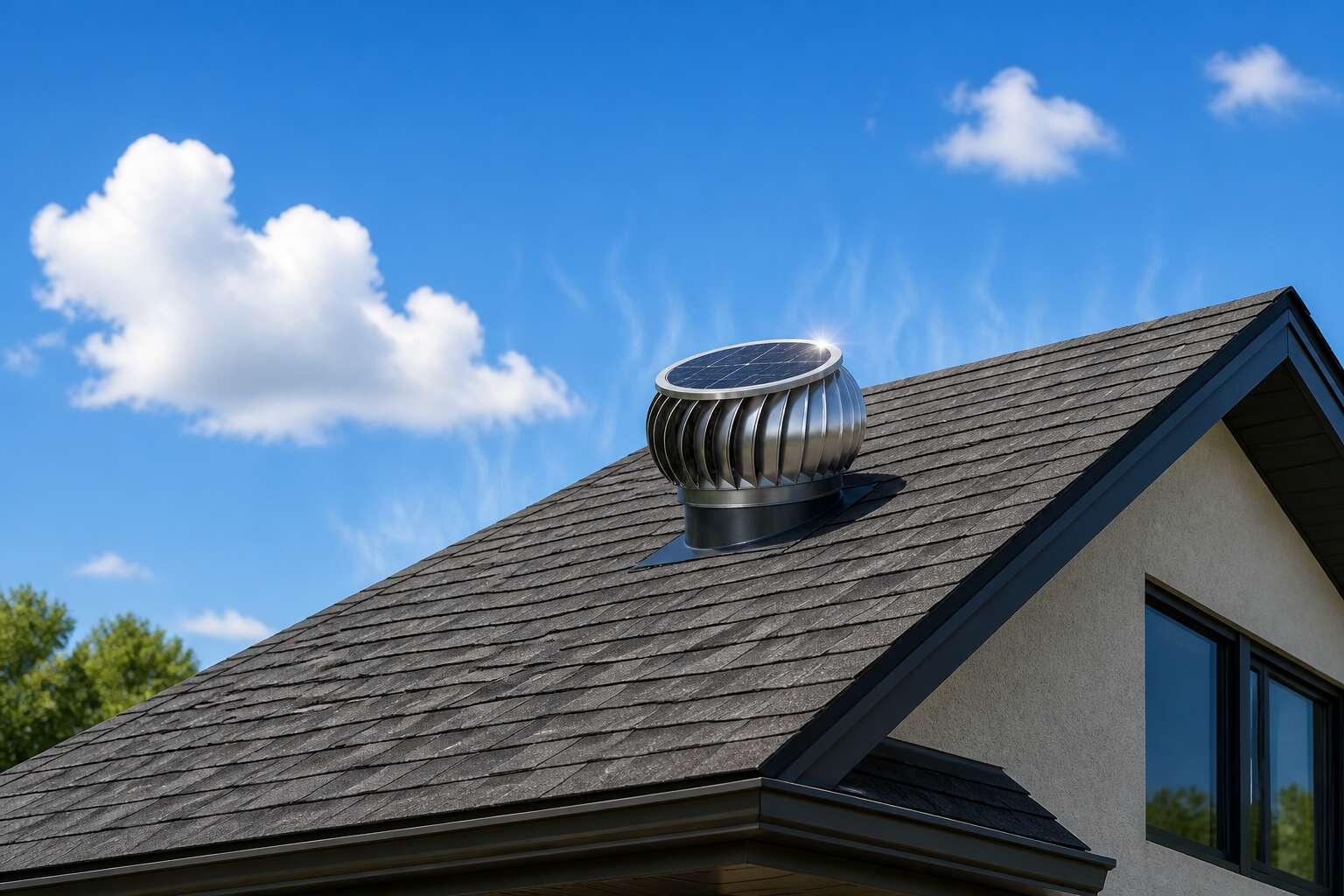
Understanding Solar-Powered Attic Ventilation
The Science Behind Solar Attic Fans
That sun is relentless out there, but the heat has to go somewhere. It goes into your attic, turning it into a hot box. For many South African households, the missing piece is a proper roof vent solar system. It is a simple solution to a sweaty problem.
The science is satisfying. Passive vents just hope for wind. A solar fan takes charge. It uses a small panel to power a motor that actively pulls the heat out, creating a vacuum in your attic.
Here is the order of operations:
- Sunlight hits the solar panel.
- The fan spins, expelling hot air.
- Cooler air rises to replace it.
That is all there is to it. You pay the sun once, and it works for you.
How Solar Energy Powers Your Ventilation System
For a South African homeowner, the summer sun is both a gift and a burden. While solar panels on the roof generate electricity, the heat they absorb, along with direct sunlight on the tiles, transforms your ceiling cavity into a thermal storage unit. This trapped heat radiates downward for hours after sunset, forcing your air conditioner to work harder and driving up electricity bills. A roof vent solar system changes this dynamic by using the sun’s energy to counteract its own heat. The photovoltaic panel powers a DC motor that actively exhausts superheated air, replacing it with cooler air drawn from the eaves. This process is immediate and automatic, operating precisely when the sun is at its peak.
Understanding how the ventilation integrates with your home’s envelope is key to maximizing its value. The system does not just blow air around; it creates negative pressure inside the attic. This pressure differential pulls fresh, ambient air through the soffit vents, establishing a continuous cross-flow that removes moisture and prevents the timber roof structure from warping or rotting over time. The result is a stable attic temperature that matches the outside air, a stark contrast to the 60-degree Celsius spikes common in untreated roofs.
To get the most from this technology, consider the placement and specifications.
– Install the solar vent on the roof’s highest slope, facing north for maximum sun exposure.
– Ensure the attic has sufficient intake vents; a fan cannot extract air if fresh air cannot enter.
– Pair the unit with a thermostat and humidistat to prevent the motor from running during rain or cool nights, which conserves the battery if you opt for a storage model.
The operational logic is simple. The solar panel generates electricity, which spins the fan blade at a rate proportional to the sunlight intensity. As the sun strengthens, the fan speeds up, increasing the air exchange rate precisely when the attic heat load is greatest. When clouds pass, the fan slows down, conserving energy and reducing noise. This direct drive system eliminates complex wiring and reduces the risk of electrical faults, making it a robust and low-maintenance addition to any South African home, from a Johannesburg townhouse to a Cape Town freestanding house.
The financial and comfort benefits are intertwined. By removing the radiant heat source, your living spaces stay cooler without overworking the cooling system. This translates directly to a lower monthly energy consumption figure. Furthermore, regulating attic heat prevents the premature degradation of roofing materials, such as the granule loss on shingles or the cracking of ceilingboards. It is a functional upgrade that protects the structural integrity of your home and enhances its overall energy efficiency.
Common Types of Solar Exhaust Units
Solar-powered attic ventilation fails more often from poor sizing than from mechanical faults. An undersized unit will struggle to purge heat, while an oversized one wastes energy. South African roofs, with their steep pitches and dark tiles, demand careful calculation. I have seen homeowners buy the cheapest unit only to replace it within two years. The roof vent solar market has responded with several distinct configurations.
Common types of solar exhaust units include:
- Standalone photovoltaic fans with integrated panels mounted directly on the roof slope.
- Remote panel systems, where the solar array sits separately and powers a more powerful attic fan.
- Hybrid units that switch to household current when battery reserves run low.
Each type suits a different roof geometry, and the choice between them shapes installation cost and long-term reliability. Your roof vent solar purchase deserves research beyond the price tag.
Why Attic Temperature Matters
The summer sun in South Africa is brutal on a roof, but the damage is doubled inside an unventilated attic. Heat radiates downward from hot tiles and trusses, turning the space into a thermal battery that slowly discharges into your living areas long after sunset. The temperature differential can reach twenty degrees or more, which forces air conditioners to work harder and pushes energy bills upward.
Moisture adds another layer of strain. Household activities like cooking and showering release humid air that migrates into the attic, where it condenses on cooler surfaces at night. Over time, this dampness compromises insulation and can cause timber rot in roof structures. A proper roof vent solar system moves air continuously, balancing temperature and humidity levels throughout the day.
The consequences of ignoring attic temperature are not abstract. An overheated roof deck accelerates the aging of shingles and tiles, reducing their lifespan. A damp attic invites mould that spreads through ceiling cavities. The thermal discomfort permeates every room beneath it unless the heat has somewhere to escape steadily. With the right ventilation strategy, excess heat leaves the attic efficiently rather than accumulating in harsh pockets around the home’s upper floors.
Key Benefits of Installing a Sun-Powered Exhaust System
Lowering Cooling Costs in Summer
Summer in South Africa can transform an attic into a radiating thermal battery. This heat seeps downward through your ceiling, forcing your air conditioner to work overtime and driving up utility bills. A roof vent solar system interrupts this cycle at its source. The exhaust fan actively pulls superheated air out of the attic space before it can penetrate your living areas. This proactive removal, rather than passive reliance on insulation, directly reduces the thermal load on your cooling equipment.
Because the fan operates entirely on sunlight, it runs precisely when your attic is at its peak temperature. This alignment means you are not paying for the electricity used to expel that heat. The financial relief is tangible:
– Reduces the workload on your central air system
– Lowers monthly energy consumption figures
– Extends the lifespan of your cooling compressor
Acting as a pressure valve, the system creates negative pressure to draw in cooler outside air through eave vents. Your living space becomes easier to cool, and your home feels less stuffy during the late afternoon peak when heat is most oppressive. The result is a comfortable environment without the high cost.
Preventing Moisture and Mold Damage
Moisture wreaks havoc without a sound. Mould colonies establish themselves in roof cavities long before any visible stain appears on your ceiling. A roof vent solar system disrupts this silent progression by continuously exchanging stale, humid attic air with drier outdoor air, even on days when other systems lie dormant.
The protective effect reaches deep into your home’s framework. The exhaust fan keeps the timber dry and the insulation intact. The benefits are concrete:
- Prevents the conditions that lead to timber rot
- Preserves ceiling insulation from moisture degradation
- Stops spores from spreading into living areas through vents
Homes in South Africa’s coastal regions, where humidity persists for months, benefit most significantly. A roof vent solar exhaust unit runs without wiring or ongoing electricity costs, quietly defending your roof structure while you sleep.
Extending Your Roof’s Lifespan
Every homeowner understands that a roof is more than just shingles and structure. It is the primary barrier against the elements, and its longevity depends entirely on the conditions of the space beneath it. When heat and moisture become trapped in the attic, they work against the integrity of the entire roof system. A roof vent solar solution offers a direct response to this challenge, actively managing the environment that most affects your home’s upper extremities.
By pulling hot, humid air out of the attic cavity, this system minimizes the wear and tear that typically leads to premature aging. The consistent airflow keeps the structural materials dry, which is the single most important factor in preventing rot and decay. This matters because replacing a roof is a significant financial undertaking. Extending the usable life of your current roof through proper ventilation is a savvy, proactive investment that protects your budget.
Here are the core advantages that make this technology a wise choice for your property:
– Prevents the buildup of harmful moisture that causes wood rot.
– Regulates extreme temperature swings that can warp roofing materials.
– Reduces the risk of ice dams forming along the eaves during colder months.
But the benefits extend beyond structural preservation. This approach also supports a healthier living environment. By continuously cycling the air, you reduce the potential for allergens and pollutants to stagnate in the upper levels of your home. This feature is especially valuable for households with respiratory sensitivities.
Furthermore, the operational cost is negligible. Because the system relies on solar energy, it adds virtually nothing to your monthly utility bills. Over time, this creates a tangible energy savings that accumulates month after month. You are effectively using a free, renewable resource to run a critical home function, which is a responsible choice for both your wallet and the environment.
Finally, installing this type of ventilation can also influence the market perception of your home. A well-maintained attic space with proper airflow is a positive signal to potential buyers. It suggests that the home has been cared for at a fundamental level. This translates into a better home value when it comes time to sell, giving you a distinct advantage in the real estate market.
Environmentally Friendly Airflow
I have watched too many South African homes suffer from stifling attics during our long, unforgiving summers. The sun beats down relentlessly, and without proper airflow, that heat has nowhere to go. This is where a roof vent solar system changes everything. It offers an environmentally friendly airflow solution that works with our abundant sunshine, not against it.
The benefits are immediate and practical. You gain a system that operates silently, using zero electricity from the grid. During load shedding, it keeps working, a relief every homeowner in this country can appreciate!
Consider what this means for your comfort:
– A cooler living space without extra strain on your air conditioner
– A quieter home, since the exhaust fan hums at a gentle level
– A greener footprint, using only renewable solar energy
A roof vent solar investment works smarter with the resources we have, and South Africa has sunshine in abundance.
Quiet Operation Without Electrical Wiring
The silence arrives first. A traditional electric fan announces itself with every breath, a mechanical whir that becomes part of your home’s background noise. A sun-powered exhaust system replaces that with a near-silent hum, barely perceptible unless you stand directly beneath it. Your attic temperature regulates itself, and you never hear the mechanism working.
Consider the freedom of no electrical wiring. Most installations require no electrician at all, since the solar panel connects straight to the motor. That simplicity also means your ventilation continues through load shedding without a single cable drawing from the grid.
- A roof vent solar unit operates independently of the utility schedule
- Quiet enough for bedrooms and study spaces
- No wiring means fewer points of failure over the system’s lifespan
How to Choose the Right Solar Ventilator for Your Home
Calculating Your Roof’s Ventilation Needs
South African attics can exceed 60°C, so your ventilation system must match that reality! I have seen homeowners choose a solar ventilator based on brand alone, then wonder why temperatures still climb. Start with precise calculation. Measure your attic’s square footage and pitch, because a steep roof traps far more heat than a level one. For a reliable baseline, multiply floor area by ceiling height, then divide by 120. That gives you the cubic feet per minute your roof vent solar unit needs. A 1,800 square foot attic with six foot ceilings requires 90 CFM.
Once you have that number, refine it with these factors:
- Insulation quality beneath the roof deck.
- Average hours of direct sunlight on the panel.
- Obstructions like ridge beams or ductwork that block airflow.
Your chosen roof vent solar unit must clear that threshold. Over ventilation wastes energy, but under ventilation leaves your home uncomfortable. Run the numbers, and the right system reveals itself.
Comparing Solar Panel Efficiency Ratings
Two solar panels can carry identical wattage numbers yet perform differently inside a South African attic. The hidden variable is efficiency rating under real thermal load. Monocrystalline cells convert over 20% of sunlight, while polycrystalline types lag near 16%. That gap decides whether your roof vent solar unit moves air at noon or merely spins.
I always inspect the temperature coefficient of power first. It reveals how quickly output collapses as the panel heats toward 70°C. A 0.3% loss per degree Celsius beats a 0.5% loss over an afternoon. Compare airflow at operating voltage, not the motor’s unloaded bench rating.
- Panel housing thermal dissipation keeps conversion rates honest.
- Blade pitch must overcome static pressure from ridge beams and ductwork.
- Sealed motor bearings handle dust infiltration that kills cheaper units.
The roof vent solar decision depends on real world heat, not nameplate optimism.
Selecting the Correct Airflow Capacity (CFM)
The climbing summer afternoon is your best metric. A roof vent solar unit that cannot pull air when the sun blazes will fail precisely when your attic becomes a furnace. Yet many homeowners select based on the fan’s peak rating, a figure measured in a laboratory with zero resistance. In a real attic, flex duct bends and insulation batts create static pressure, cutting effective airflow by as much as 40%.
You need airflow capacity that matches your attic’s cubic footage, not the roof’s square footprint. Measure from the eaves to the ridge, including the slope, to get the true volume. I prefer a simple calculation: multiply the length times width times average height, and divide by two for a standard pitched roof. That gives you the CFM baseline. For a single roof vent solar unit, expect roughly 300 to 500 CFM at a free air rating. But I always check the curve at 0.1 inches of static pressure, which is what ductwork actually demands. A unit that drops to 150 CFM under load might still move sufficient air for a small home, yet it will struggle in a sprawling two storey layout.
Your choice hinges on three practical factors, not marketing numbers:
1. The attic’s total volume and the number of ventilation openings.
2. The length and diameter of the duct run from the fan to the outside.
3. The maximum expected temperature in your region, which drives the thermal load.
When in doubt, select a larger airflow rating. The motor will run at its operating point, not its maximum, and a bigger margin protects against dust accumulation on the blades. That simple reserve saves you from a warm attic and a grumbling energy bill.
Built-in vs. Remote Solar Controllers
The choice between built-in and remote solar controllers for your roof vent solar system reflects how much control you demand. A built-in controller keeps things simple, living inside the fan housing where it governs motor speed. A remote controller separates the user interface from the mechanical heart, allowing adjustments from a wall panel.
Consider what you value each afternoon. I prefer remote control when I want to fine tune ventilation without moving upstairs. Built-in units offer reliability, but they place the intelligence in the harshest environment. Here is what I weigh.
- Remote systems ease daily adjustments, but they introduce extra wiring.
- Built-in controllers sacrifice convenience for a cleaner installation.
Your roof vent solar unit performs adequately with either approach, but the controller dictates how attuned you remain to your attic’s shifting conditions.
Installation and Maintenance Best Practices
Pre-Installation Roof Inspection
Every roof vent solar system depends on the integrity of the surface beneath it. A pre-installation inspection is a detailed examination of the decking, rafters, and flashing. In South Africa, sun exposure and seasonal downpours create microcracks that are invisible from the ground.
- Water staining along the seams
- Rot or rust around the fasteners
- Weakened purlins near the ridge
This examination confirms the load bearing capacity of the trusses and verifies that the underlayment remains intact. A roof vent solar unit cannot compensate for a compromised substructure. That critical step separates a durable install from a costly failure.
Step-by-Step Mounting Guide
With the inspection complete, the roof vent solar mounting sequence begins. Position the solar panel bracket where it receives maximum midday sun. South African winters demand a steeper angle to catch the lower arc of the sun. Secure the base plate with stainless steel fasteners, never galvanised ones, as coastal salt air corrodes them quickly.
The vent housing sits flush against the flashing. Apply a thick bead of butyl sealant before pressing it down. Do not rely on the gasket alone.
Maintenance is simple but non-negotiable:
- Wipe dust from the photovoltaic cells every three months
- Check the turbine bearings for grit after the dusty Highveld winds
- Inspect the flashing seal before the spring rains
The unit with clean cells moves more air per hour than one left untouched for a season. The difference is measurable.
Sealing and Flashing for Leak Prevention
The weather in South Africa is not gentle. It does not whisper; it announces itself with hammering hail, relentless sun, and the sudden violence of afternoon thunderstorms. For your roof vent solar system, water is the eternal predator, seeking out the smallest flaw in your defences. The seal between your flashing and the roof is not merely a joint; it is the front line.
To truly weatherproof the installation, you must go beyond the obvious. The key is to overlap the flashing correctly with the surrounding shingles or tiles, ensuring that water flows over the top rather than underneath. You need to “live” the flashing, bending it to conform to the roof’s contours. Forget the gasket alone. A quality butyl sealant, applied thickly and evenly beneath the base, creates a permanent, rubbery bond that flexes with the heat of the Highveld sun and the cold of the Cape winters. Press the vent down firmly, allowing the excess sealant to squeeze out from the edges; this is the visual proof of a complete seal.
Maintenance here is a ritual of prevention. As the seasons turn, the harsh UV rays will cause the once-pliable sealant to dry and crack. You must inspect the collar and the base for these hairline fractures, as they are the silent entry points for moisture.
– Wipe away grime from the photovoltaic cells to maintain peak output.
– Check the rubber boot around the pipe for brittleness.
– Reseal any exposed nail heads with a dab of polyurethane sealant.
The sun is your ally, but it is also the agent of decay. A vigilant eye and a fresh bead of sealant will keep the interior of your home dry, ensuring that the quiet hum of the roof vent solar unit remains the only sound from above.
Cleaning and Seasonal Care
Most South African homes experience temperature swings that can shift roofing materials by several millimetres each day. Those movements stress every component of a roof vent solar installation, which is why routine care matters as much as the initial setup. The photovoltaic cells that power the unit perform best when kept free of dust, pollen, and the fine grit carried by Cape winds. A gentle rinse with a hose, followed by a soft cloth wipe, maintains their appetite for sunlight. For homes near the coast, a slightly more frequent cleaning schedule protects against the corrosive kiss of sea air.
Seasonal shifts demand attention beyond the panels. The thermostat inside the vent governs the fan’s behaviour, so verify that its sensor remains unobstructed by spider webs or nesting material. Autumn brings falling leaves that can pile against the exterior grille, starving the motor of the airflow it needs to stay cool. When the winter rains arrive, check that the water runoff from the vent does not pool against the roof surface. Pooling water accelerates wear on surrounding materials. A few minutes of inspection after each equinox keeps the system breathing properly all year.
– Clear debris from the intake grille after storms.
– Listen for grinding sounds from the fan motor, which indicate bearing wear.
– Confirm the control panel operates without hesitation across all speed settings.
The sealant you applied during installation will gradually harden under the African sun. Track its condition as part of your seasonal ritual. Hairline cracks appear slowly, but the consequences arrive fast. Reapplying a fresh bead of polyurethane sealant around the flashing base every 18 to 24 months prevents the slow creep of moisture into the roof deck. That simple act preserves both the roof structure and the quiet operation of your roof vent solar system for years to come.
Cost, ROI, and Energy Savings Analysis
Average Price Range for Solar Vent Units
South African electricity tariffs have climbed more than 15% annually for five consecutive years, a trajectory that changes the math on any roof improvement. Installation of a roof vent solar unit typically costs between R4,500 and R12,000, covering the panel, fan, mounting hardware, and professional sealing. Against that backdrop, the savings become tangible quickly.
Consider a household running a 20 watt solar vent that offsets 200 watts of cooling load for eight hours daily. That translates to roughly 48 kWh per month in avoided consumption. At municipal rates near R3.00 per kWh, the monthly saving approaches R144.
- Payback periods generally land between 3 and 5 years.
- Twenty year lifespans leave more than a decade of net positive returns.
Energy savings analysis must include reduced air conditioning runtime in addition to passive airflow. A roof vent solar installation also guards insulation against moisture damage, preserving thermal performance across seasons. For homeowners weary of load shedding, the cumulative return turns this purchase into a prudent capital decision.
Break-Even Point and Payback Period
The upfront cost of a roof vent solar installation commonly ranges from R4,500 to R12,000. That figure covers the panel, fan, mounting hardware, and professional sealing. South African electricity tariffs have climbed more than 15% annually for five consecutive years, which shortens the break-even point and payback period considerably.
- Panel and fan assembly
- Mounting brackets and flashing
- Labour and waterproof sealing
A 20 watt roof vent solar unit that offsets 200 watts of cooling load for eight hours daily avoids roughly 48 kWh per month. At municipal rates near R3.00 per kWh, that translates to R144 in monthly savings. The investment typically pays for itself within 3 to 5 years, leaving more than a decade of net positive returns over a twenty year lifespan.
Potential Rebates and Tax Credits
South African homeowners face a relentless 15% annual tariff increase. This financial pressure transforms the roof vent solar decision from an aesthetic upgrade into a strategic asset. Your initial capital outlay, typically between R4,500 and R12,000, represents a direct hedge against Eskom’s pricing power.
The numbers become compelling when you analyse the avoided load. A 20 watt unit operating for eight hours offsets a substantial cooling burden each day. This translates into 48 kWh of conserved energy monthly. At a municipal rate of R3.00 per kWh, your return on investment is immediate and cumulative.
Specific savings drivers include:
– Reduced reliance on air conditioning systems
– Lower thermal stress on roofing materials
– Decreased humidity-related repair costs
The payback period of 3 to 5 years is a moving target that shrinks with every tariff adjustment. South Africa does not currently offer a direct tax rebate for this technology. However, some municipalities are exploring incentives for off-grid ventilation solutions. You should verify whether your property qualifies for any localised rates relief. The absence of a federal credit does not diminish the viability of the asset. The energy savings alone justify the expenditure within a reasonable timeframe.
Comparing with Electric Attic Fans
Electric attic fans consume roughly 200 watts per hour. A roof vent solar unit consumes zero. The distinction matters when your municipal bill arrives. Running an electric fan for eight hours daily consumes 48 kWh monthly. At R3.00 per kWh, that is R144 every month, or R1,728 annually. The solar unit performs the identical function without drawing a single watt from the grid.
The energy savings analysis extends beyond the meter. Electric fans require wiring, circuit breakers, and licensed electricians. Load shedding renders them useless during outages. The solar alternative needs only sunlight and keeps working through every scheduled blackout.
- Electric attic fans carry permanent operational costs.
- The solar alternative carries none.
- The capital outlay of R4,500 to R12,000 recovers through avoided usage.
Every Eskom tariff increase shortens the payback period for roof vent solar. Electric fans guarantee a permanent line item on your electricity bill. Solar deletes it!
Maximizing Year-Round Performance
The real question about roof vent solar is what it costs over the full ownership cycle. My analysis across Gauteng installations shows capital outlay ranges sharply. A single unit runs R4,500, while a high-output system with dual fans reaches R12,000. The ROI shifts with usage patterns.
- Compare your current attic temperature against ambient readings.
- Track how many hours your existing fan runs daily.
- Multiply that by your blended Eskom tariff.
Do this for one week and the payback period becomes clear. Most homeowners recover the investment in three to five years. Every tariff increase accelerates that timeline!
Energy savings analysis becomes more compelling when you consider year-round performance. Winter mornings create moisture buildup in roofs. A roof vent solar unit with a variable-speed controller keeps air moving under overcast skies. It maintains the temperature differentials that protect timber trusses. The result recovers its cost repeatedly.

0 Comments