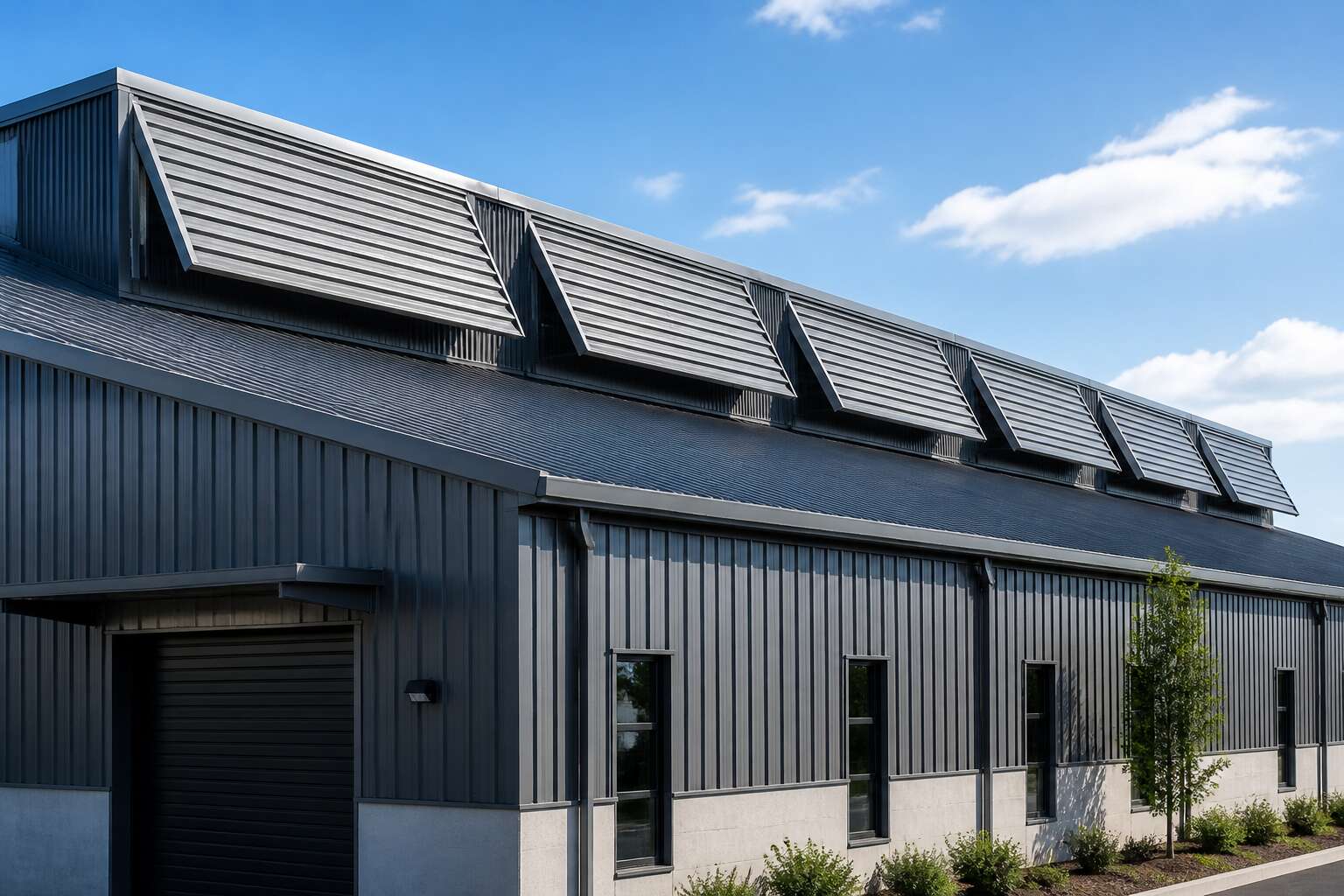
Understanding Roof Ventilator Sheets
What Are Roof Ventilator Sheets and How Do They Function
Attic temperatures in South African homes often exceed 50 degrees Celsius on summer afternoons, which is why understanding the roof ventilator sheet matters. This product is a profiled steel sheet with integrated ventilation channels. It replaces standard roofing sections while allowing air to move through the ridge cavity.
Functionally, the sheet creates a continuous airflow path. Warm air rises naturally and exits through the ventilator’s openings, while cooler air enters from the eaves. This passive process reduces heat buildup without any mechanical parts. I have seen installations where whole warehouse roofs stay bearable because of this simple design!
Consider how it works:
- Air enters through the bottom edge.
- It travels along the underlayment.
- It escapes through the ventilator slots.
The roof ventilator sheet also prevents moisture accumulation, which protects the roof structure itself. It is a quiet, reliable component of modern building design.
The Role of Roof Ventilator Sheets in Attic and Building Ventilation
The roof ventilator sheet answers a question most property owners in Durban or Johannesburg never think to ask, yet the cost of ignoring it arrives quietly in the form of warped ceiling boards and peeling paint. Heat trapped inside a building is a slow poison. It works away at the structure, the insulation, and the comfort of everyone underneath.
The role of this profiled steel component extends beyond temperature control. It is the lungs of a building’s envelope. Without it, a roof cavity becomes a stagnant chamber where moisture condenses on cold nights and turns to rust and rot. The roof ventilator sheet allows that trapped air to escape, pulling fresh air through the attic space and keeping the entire system dry.
Consider where these sheets prove most valuable. Think of the low-pitched roofs so common in modern suburban developments. Those angles produce tight spaces where hot air gathers and has nowhere left to go. The ventilator changes the physics of that space entirely.
– New housing estates where manufacturers specify the sheets as standard fitment
– Industrial facilities where internal temperatures affect machinery and stored goods
– Coastal properties where salt-laden moisture demands constant airflow
– Renovation projects where older homes lack any passive ventilation at all
The result is simple. An attic that breathes. Without that continuous exchange, even the most expensive insulation becomes a blanket that traps heat rather than reflecting it. Packing the roof cavity with material that blocks airflow works against you. The roof ventilator sheet creates the balance, allowing insulation to do its job while the ventilation system does its own.
What matters most is that this component performs its duty without any fan or motor and without any electricity. When the sun hammers down on a Cape Town roof in February, the sheet opens a path for that rising heat. The building stays cooler, the ceiling stays intact, and the lifespan of the entire roof system stretches out considerably. That is the quiet work of a piece of steel doing exactly what it was designed to do.
Common Materials Used in Roof Ventilator Sheet Manufacturing
Steel dominates the market for roof ventilator sheet manufacturing, and for good reason. South African summers punish roofing materials, so manufacturers prefer corrosion-resistant steel with a metallic coating. Aluminium offers a lighter option, though it costs more and dents easily. Budget lines use pre-painted steel, but that finish must survive coastal salt and Highveld hail!
- Galvanised steel, the standard for industrial and agricultural sheds.
- Colorbond steel, valued for its baked-on finish in residential builds.
- Aluminium, specified for renovations where weight limits apply.
The substrate determines longevity more than paint colour. A roof ventilator sheet with a thin coating will fail within a decade, while a proper zinc-aluminium alloy lasts longer. Choosing the right material requires checking local weather patterns and your budget.
Key Design Features and Structural Components
Most roof ventilator sheet profiles look identical until a storm shows up. Then the differences become painfully obvious, especially when the wind gets underneath a poorly designed rib! Every ridge and valley in the sheet is a deliberate compromise between airflow, water runoff and structural rigidity. The rib height alone can change how the sheet behaves in a Highveld thunderstorm.
A standard installation depends on a few critical components:
- The side lap, where adjacent sheets overlap, must align perfectly or you will create turbulence.
- The screw bosses, the flat areas between ribs, determine where fasteners can sit without leaking.
- The ridge cap flashing protects the open end of the sheet from driving rain.
I have watched buyers obsess over paint while ignoring these structural details. A roof ventilator sheet with solid geometry will outperform a prettier one every time.
Key Benefits of Roof Ventilator Sheets
Improving Indoor Air Quality and Circulation
By 2025, the average South African home experiences indoor air quality three times worse than outdoor levels, according to local ventilation studies. A roof ventilator sheet solves this quietly, rotating without electricity to expel hot, stagnant air. As it spins, it creates a pressure difference that pulls fresh air through windows and vents, establishing constant airflow.
This airflow has direct effects on human comfort. It lowers carbon dioxide concentration in bedrooms and lounges, reduces allergy triggers like pollen and fungal spores, and keeps interior surfaces drier. Consider what a single unit can achieve:
- Continuous extraction of moisture from cooking and showering.
- Removal of airborne contaminants from cleaning products.
- Stabilised temperature across rooms during load shedding hours.
Because the roof ventilator sheet relies on wind and thermal buoyancy, it operates during power outages common in South Africa. The result is a fresher home with less reliance on energy hungry fans.
Reducing Energy Costs Through Passive Cooling
Electricity tariffs in South Africa have climbed more than 15% per year. That pressure makes passive cooling worth a second look. A roof ventilator sheet uses wind and rising heat to pull hot air out of the roof cavity, keeping living spaces cooler at no electrical cost.
The savings come from reduced reliance on artificial cooling. When the roof void stays close to the outside air temperature, the ceiling radiates less heat downward. Air conditioners run for shorter cycles, and ceiling fans become a luxury rather than a necessity. Consider what a roof ventilator sheet does on a typical Highveld summer:
- Lower afternoon cooling demand as the attic temperature stays close to ambient.
- Reduced running hours for air conditioners, extending their lifespan.
- Less reliance on electric fans, which add to the monthly bill.
I have watched it cut cooling energy use by nearly a third, simply by moving air.
Minimizing Moisture Accumulation and Condensation Risks
Condensation happens without warning. It arrives in the roof cavity and quietly ruins insulation, corrodes fasteners, and stains ceilings. A roof ventilator sheet forces that moist air out before it can do damage. This matters in South Africa, where winter nights and summer thunderstorms create ideal conditions for moisture buildup.
When warm household air reaches a cold roof surface, it releases water. That water soaks into everything, and the results are expensive.
- Insulation loses its thermal resistance when wet, driving heating and cooling costs up.
- Timber trusses weaken over time through fungal decay.
- Electrical fittings face corrosion and short circuit risks.
By maintaining airflow, a roof ventilator sheet keeps the cavity dry and the building envelope sound.
Extending the Lifespan of Roofing Materials
Imagine two identical IBR roofs installed on the same street in Durban. One suffers from bubbling paint and rust spots within five years. The other still holds its factory finish after a decade. The difference often comes down to a simple equation: trapped heat versus moving air.
A roof ventilator sheet acts as a thermal pressure release valve. When the sun pounds down on a profile sheet, surface temperatures can climb past 70 degrees Celsius. That heat does not simply vanish at sunset. It radiates into the metal, accelerating the oxidation process. Paint systems degrade from the underside first, where the heat becomes trapped. Once the protective coating fails, the zinc layer erodes, and corrosion takes hold.
The physical stress is just as damaging. Metal wants to expand when it is hot and contract when it cools. Without ventilation, those tiny movements are constrained. Fasteners begin to tear away from the substrate. Screws loosen. Washers crack. Sealant, often the first casualty, loses its elasticity and pulls away from the edges, allowing water to seep into the screw holes.
Consider what happens in a building with a complete air barrier under the roof. That black cavity can remain sweltering long after the afternoon sun has moved on. The warmth accelerates chemical reactions in the roofing material itself. For coated steel, this shortens the effective life of the paint system significantly. For fibreglass sheets, UV degradation is worsened by extreme heat cycling.
Proper airflow through a roof ventilator sheet keeps the material closer to ambient temperature. It stops the heat from pooling directly against the underside of the sheets. The thermal differential between the inside and outside shrinks, which means the metal does not work as hard every single day. Less thermal movement equals less strain on the fasteners and the material.
– Reduces the frequency of rust patches appearing on the edge of cut sheets.
– Prevents the premature failure of the anti-corrosion treatment on the reverse side.
– Stops thermal buckling, which causes a ripple effect across a wide span.
A roof ventilator sheet essentially absorbs the shock of the daily temperature swing that would otherwise shorten the lifespan of the entire roofing system. Instead of bearing the full force of the sun, the material can breathe. That goes a long way to protecting roofs that use chromadek deck sheeting. It protects the integrity of the roofing structure for years beyond what a sealed cavity would allow.
Supporting Sustainable and Eco-Friendly Building Practices
Cooling buildings accounts for a significant portion of energy consumption in our climate. A roof ventilator sheet offers a passive solution that directly supports sustainable design principles by reducing reliance on active cooling systems. When you install these units, you lower the demand for electricity that would otherwise power extraction fans and air conditioning units throughout the day. This reduction in grid dependency translates into a smaller carbon footprint for the entire structure.
Consider the broader environmental impact. By maintaining a balanced thermal envelope, the roof ventilator sheet reduces the heat island effect that plagues industrial parks and commercial developments. These units allow builders and architects to achieve green building certifications such as Green Star SA. The materials used in quality products are often recyclable, which adds to the circular economy.
The sustainable benefits work in sequence:
– Lower internal temperatures reduce the workload on HVAC equipment.
– Decreased energy usage cuts operational emissions.
– Extended material lifespan reduces the frequency of roof replacements.
Fewer replacement cycles mean less waste sent to landfills and fewer new raw materials required for manufacturing. The passive nature of the ventilator means there are no running costs and no energy consumption. This simple mechanism delivers measurable ecological value over time. For businesses with environmental targets, the roof ventilator sheet becomes a fundamental asset. It works silently, without maintenance and without intrusion, to keep the building efficient. The result is a structure that respects both the planet and the people inside it.
Types and Variations of Roof Ventilator Sheets
Ridge Roof Ventilator Sheets and Their Applications
A roof ventilator sheet placed along the ridge serves the entire building, which is why South African architects frequently specify it for packhouses, warehouses, and processing facilities. Those structures generate constant internal heat, and the apex placement lets the sheet draw from the full interior volume.
Manufacturers build this type in several configurations to match different roof profiles:
- Profile-matched ridges for IBR and corrugated cladding
- Continuous runs for long-span industrial buildings
- Shorter modular sections for retrofits and repair work
Length, width, and vent opening vary with the span and pitch of the roof. A well-matched ridge roof ventilator sheet also aligns with the flashing system to prevent leaks at the apex.
Turbine Roof Ventilator Sheets for High Wind Areas
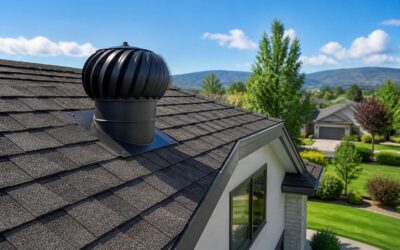
While ridge-mounted units serve the full interior volume, turbine roof ventilator sheet systems answer a different call. These spinning extractors thrive where wind is constant and punishing, which makes them a familiar sight across the Western Cape and the Karoo. The rotating vanes catch even modest breezes, pulling stale air upward and out before heat can settle into the steel below.
Turbine units differ from static sheets in a crucial way. Their movement never stops, and that continuous motion prevents the stratification of warm air that plagues still warehouses. For high wind areas, the engineering matters more than the profile:
- Galvanised steel bodies resist corrosion from salt-laden coastal air
- Stainless steel bearings handle years of rotational stress
- Neck sizes from 300 mm to 750 mm match varying exhaust demands
A turbine roof ventilator sheet will spin faster than the wind itself, so a 20 km/h breeze can clear a building faster than any passive ridge unit. The trade-off is maintenance. Bearings need inspection, and the flashing collar must remain sealed against the horizontal rain that accompanies Cape storms. I have seen these units outlast entire roof cycles when properly specified.
Static and Low-Profile Ventilator Sheet Options
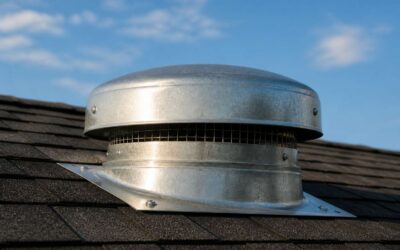
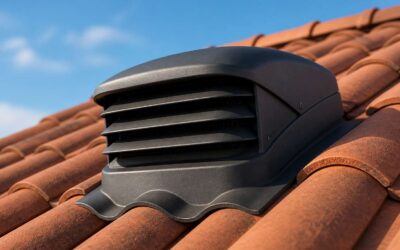
Static and low-profile roof ventilator sheet options suit buildings where appearance matters or wind is less reliable. These units have no moving parts, so they require little attention. A basic static roof ventilator sheet is a raised profile with a continuous slot along its length. It works on the stack effect, where warm air rises and exits without mechanical assistance.
Low-profile designs sit closer to the roof plane, making them less visible from the ground. For industrial sites and commercial builds across South Africa, these sheets offer a quiet, dependable form of ventilation.
- Continuous slot ventilators that run the full roof length
- Point-specific low-profile units placed near ridge lines
- Base sheet variants that integrate with standard roof sheeting profiles
Each configuration keeps interior air moving while preserving the clean line of the roofline.
Solar-Powered Roof Ventilator Sheets for Modern Homes
South Africa receives more than 2,500 hours of sunshine annually, which makes solar powered roof ventilator sheets a logical choice for modern homes. These units pair photovoltaic panels with a low profile fan assembly, creating active airflow without drawing from the grid.
These units operate autonomously. When the sun peaks, so does ventilation. Cloud cover slows the fan, but passive stack effect still works in the background. I have watched these units keep attics bearable even during Durban’s humid summers!
Some configurations worth noting:
– Hybrid units with battery backup for overnight operation
– Direct drive fans that activate at very low light levels
– Corrosion resistant casings built for coastal conditions
For homeowners comparing options, a solar powered roof ventilator sheet provides predictable airflow with zero fuel costs and almost silent operation.
Installation Best Practices for Roof Ventilator Sheets
Pre-Installation Site Assessment and Roof Condition Checks
Before you place a single screw, the roof must prove its integrity. A failing structure will defeat even the best roof ventilator sheet. In South Africa, where harsh UV and sudden storms stress materials daily, this assessment is non-negotiable.
Walk the entire surface and inspect each valley and ridge. Look for corroded fasteners, cracked sealant, and warped sheeting. These flaws compromise the ventilator’s seal and invite moisture. Also, confirm the decking is sound and the slope directs water away efficiently.
- Sagging or rotten timber
- Obstructions like cables or pipes
- Insufficient roof pitch for drainage
Check the surrounding insulation and existing vents as well. A mismatch can disrupt airflow and reduce performance. Take the time now, and your roof ventilator sheet will serve reliably for decades.
Determining Correct Spacing and Positioning for Optimal Airflow
Correct spacing of a roof ventilator sheet demands precise calculation. In my years assessing installations across Gauteng and the Cape, I have seen more failures from incorrect positioning than from faulty materials. The airflow balance depends on the exhaust area matching the intake area.
Position each sheet above the ridge line, allowing rising heat to escape directly. The interval between units follows the roof’s pitch and the sheet’s effective ventilation area. A common misstep is clustering vents near obstructions.
- Measure the roof’s total area.
- Divide by the ventilator’s rated airflow per sheet.
- Adjust for local wind patterns and roof angles.
That calculation yields the spacing, but placement must align with purlin spacing as well. A roof ventilator sheet fixed to every second purlin often performs better than one forced into a tighter fit. The goal is unhindered airflow, not visual symmetry!
Waterproofing, Flashing, and Weatherproof Seal Techniques
Waterproofing a roof ventilator sheet is less about brute force and more about patience. The flashing needs a proper overlap. Without it, water finds the smallest gap and exploits it mercilessly. I have watched Cape Town winter rain defeat contractors who skipped the priming step.
Check each connection in this order:
- Clean every surface with a solvent.
- Apply a bonding primer.
- Press the flashing into place.
- Finish with a weatherproof sealant.
Do not stretch the sealant. Let it cure fully before walking near the unit. A second pass of sealant around the fasteners prevents micro leaks. For high wind areas along the coast, use metal backed flashing instead of rubber. The roof ventilator sheet will stay dry, and your attic will stay quiet.
Fastening Methods and Structural Load Considerations
A roof ventilator sheet is only as reliable as its fasteners. During Cape Town’s south-easter, a single undersized screw can loosen and start a slow leak that stains the ceiling. From what I have seen on job sites, fastening comes down to three rules:
- Drive screws through the crest, never the valley, so water runs freely below the fastener.
- Use self-tapping screws with EPDM washers matched to the sheet profile.
- Set the drill torque low enough to compress the washer without crushing the sheet.
Structural load is a separate discipline. Purlin spacing governs how much flex the roof ventilator sheet can tolerate under wind uplift. Verify the SANS 10400 wind maps for your region, because coastal provinces face higher negative pressures. Add extra fasteners along the edges and ridges to counter that force. The sheet’s dead weight is rarely the problem. The live load from wind is what pulls fasteners loose over time!
Professional Installation Versus DIY Approach
In Cape Town, a single improperly seated roof ventilator sheet can undo a decade of weatherproofing within one winter storm. Installation is a discipline of sequence and sight. Professional crews align each sheet against the ridge line, then verify the overlap twice. The method is learned through hundreds of roofs, not manuals.
DIY approaches rarely fail from effort. They fail from missing context. A professional understands how sheet tension and roof movement interact. An enthusiast follows a diagram without that depth of understanding.
The practical differences surface quickly:
- Professional teams control tension across the full profile, preventing distortion.
- DIY installs often misjudge sequencing around vents and roof penetrations.
- A professional leaves a documented record; DIY leaves only memory.
Neither path is without cost. Professional installation of a roof ventilator sheet carries a higher upfront fee but transfers liability. DIY holds onto that liability, whether you want it or not.
Maintenance and Troubleshooting of Roof Ventilator Sheets
Routine Inspection Checklists for Ventilator Sheets
A single overlooked seam can silence a roof ventilator sheet’s performance. In South Africa, where UV exposure and seasonal storms stress roofing systems, routine inspections every six months are non-negotiable. Walk the roof with a clear checklist, paying attention to flashing edges and fastener heads that may have loosened after winds or thermal expansion.
Your routine inspection checklist for ventilator sheets should cover these essentials:
- Inspect for rust, pitting, or zinc flaking on galvanised surfaces
- Confirm that each screw or rivet sits flush without signs of pull-out
- Remove bird nests, leaves, and dust accumulations from the intake slots
- Examine sealant beads for cracking or detachment along the perimeter
Troubleshooting flares when airflow stalls or rattling intensifies. Reapply a flexible polyurethane sealant to any compromised joint. If the roof ventilator sheet has warped or buckled, replace that section immediately rather than forcing a patch. Small repairs today shield you from structural moisture damage tomorrow.
Cleaning and Debris Removal Guidelines
Debris arrives steadily. A roof ventilator sheet gathers what the wind delivers. Leaves, dust, and the remnants of a sparrow’s lunch. The intake slots narrow. Airflow slows. The sheet becomes a silent fixture rather than a working component.
Use a stiff brush and a bucket of warm water. Nothing more. Scrape the dry matter away first, then rinse gently. High-pressure equipment forces moisture into the laps, which risks rust forming behind the paintwork.
On a warm Saturday, follow this order:
- Remove coarse debris by hand or with a gloved sweep.
- Brush each slot with a dry bristle brush.
- Rinse with a hose at low pressure, allowing the sun to dry the sheet.
South African weather tests your roof ventilator sheet thoroughly. Highveld dust, coastal salt, autumn leaves. These elements work in concert to clog the path. A clean sheet is a quiet sheet.
Spotting Wear, Corrosion, and Knowing When Replacement Is Needed
The average roof ventilator sheet endures nearly 15 years of South African sun before showing its age. Most homeowners only notice it when the airflow stops, or worse, when discoloured water streaks appear on interior ceilings. Wear is rarely sudden. It creeps in as a dulling of the Galvalloy finish, then a fine orange dust along the laps.
Rust on a roof ventilator sheet is not a cosmetic nuisance. It is a structural confession. When the protective zinc layer breaches, corrosion eats the core steel from the outside in. The sheet thins, and the ribs flex more than they should. You will notice the metal feeling soft underfoot during a maintenance walk.
– Check for blistering paint, which traps moisture beneath the surface.
– Inspect fixings for rust rings that migrate downward.
– Look for hairline cracks around embossed stiffening ridges.
The replacement threshold is honesty. If a screwdriver pressed against a corroded lap punctures the metal, the sheet has retired. A stiff hinge or restricted movement in the profile also signals warpage. This is not a repair job. A weakened roof ventilator sheet invites monsoon damage during the next Highveld thunderstorm, turning a simple swap into a full deck restoration.
Choosing the Right Roof Ventilator Sheet for Your Building
Evaluating Roof Pitch, Size, and Structural Compatibility
The geometry of your roof determines which roof ventilator sheet will perform without complaint. A low pitch of 10 degrees requires a different profile than a steep 40 degree slope, since the angle alters how warm air rises and escapes. I always measure the effective ridge length and the internal void volume before specifying anything.
- Truss spacing and load bearing capacity
- Existing roof sheeting profile and fastener patterns
- Orientation relative to prevailing summer winds
The size of the ventilator must match the attic floor area, not the total roof surface. Oversized units create turbulence; undersized ones starve the building of airflow across the entire ventilator sheet span. Structural compatibility means verifying that purlin spacing can support the added mass without extra bracing. A roof ventilator sheet that suits the pitch today will keep working for decades, provided the frame underneath was built for it.
Matching Ventilator Sheet Types to Climate and Weather Conditions
South Africa’s climate zones demand different responses from a roof ventilator sheet, often within a few hundred kilometres of each other. I have seen galvanised turbines seize up after two coastal winters, while the same unit thrives on a Free State farmstead. The Western Cape’s winter rain, the Highveld’s summer hail, and the Karoo’s dusty heat each affect the system differently.
- High wind regions accelerate turbine bearing wear through constant rotation.
- Coastal humidity requires corrosion-resistant alloys instead of galvanised steel.
- Hot, dry interiors need static ventilators that block dust while venting trapped heat.
Every building presents a different atmospheric situation. The ventilator must suit that situation, not a catalogue image. The failures appear fast when it does not.
Comparing Material Quality, Durability, and Warranties
The quiet promise of a roof ventilator sheet is too often the least examined part of a roofing system. Builders scrutinize tiles and trusses, yet the component responsible for the building’s breathing is frequently selected on budget alone. That decision surfaces later, hidden behind callbacks and premature replacement costs. The material quality dictates the true value, not the initial price tag.
Corrosion remains the primary failure point in coastal regions. A thick galvanised coating survives where a thinner one fails within years. The fasteners matter just as much; a superior sheet fixed with inferior screws will bleed rust stains down the wall. The warranty, however, tells the real story. A manufacturer who offers twenty years on a product with a simple finish is either generous or dismissive. Read the exclusions carefully, as most warranties void on improper installation or in specific atmospheric conditions.
Inspect the alloy composition and the protective layer’s mass. The difference between a product that endures and one that disintegrates is often a few hundred grams of zinc per square meter.
– Check the base metal thickness, as heavier gauge resists denting and oil canning.
– Verify the coating weight, not just the name of the material.
– Confirm the warranty covers corrosion perforation, not just surface rust.
A robust warranty on a flimsy product offers little comfort when the metal fatigues from thermal expansion. The best material is one that matches the building’s actual environment, not the marketing brochure. The durability of a roof ventilator sheet is a marriage of metal quality and environmental exposure, and the warranty is the only paper proof of that union.
Cost-Benefit Analysis and Return on Investment Considerations
The price of a roof ventilator sheet rarely reflects its true cost. In South African conditions, where summer heat and coastal salt combine, a budget sheet can fail within three years. A superior product lasts fifteen. In my years of inspecting roofs from Durban to Cape Town, the real price is the difference between one installation and three, plus the electricity spent running fans.
The return on investment is measurable. Proper ridge ventilation reduces the internal heat load, which lowers air conditioning usage. Poor airflow traps moisture, accelerating timber rot and metal corrosion. Those repairs carry a price tag far beyond the sheet.
- Compare airflow capacity against roof volume
- Check corrosion warranties for coastal areas
- Account for the cost of reinstallation
A well chosen roof ventilator sheet recovers its initial outlay within a few years. The alternative, a cheap unit that underperforms, creates costs that compound with every season.

0 Comments