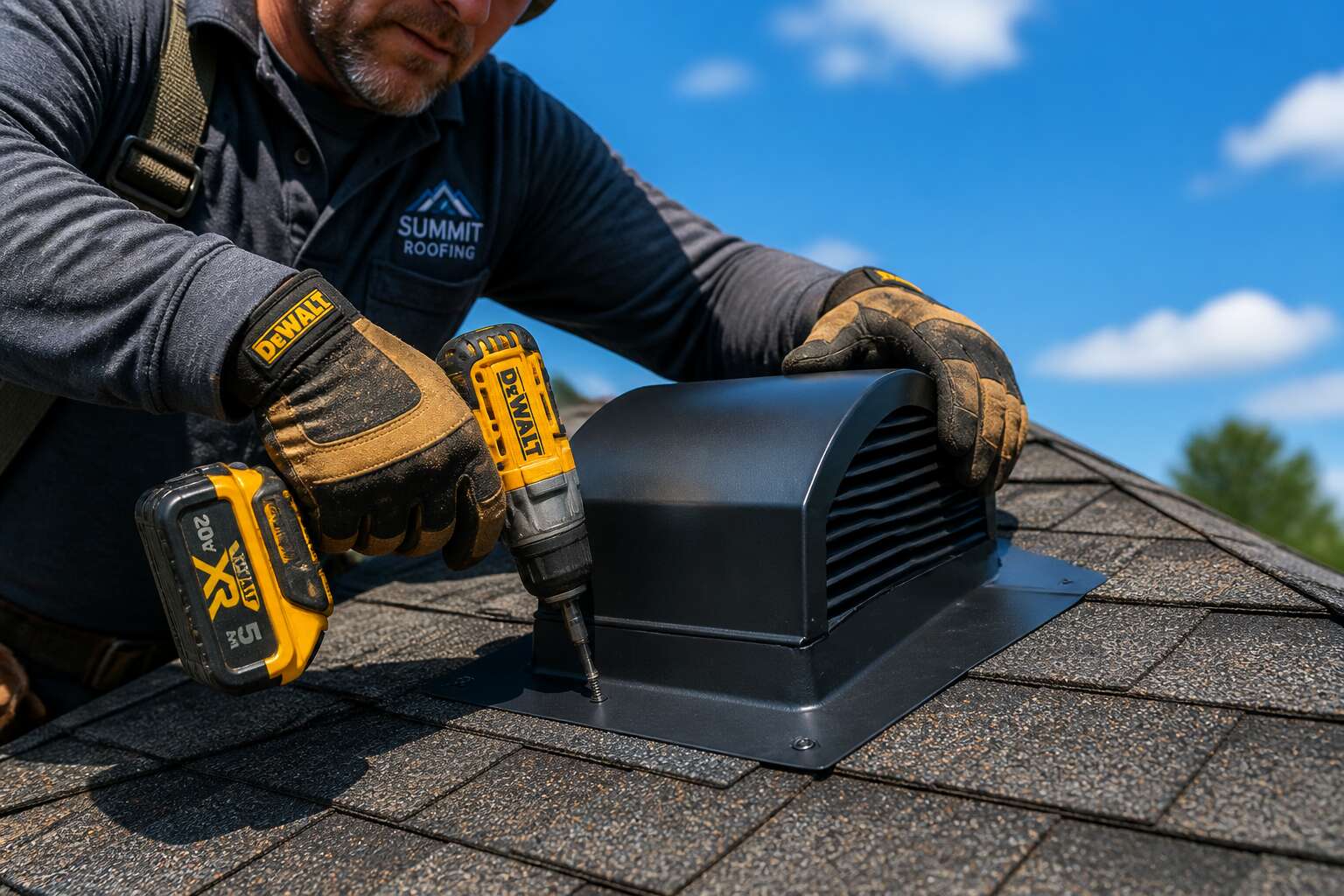
Key Factors Influencing Roof Vent Installation Cost
Roof Type and Material
Before I quote a price, I study the roof. The material and pitch determine how much for roof vent installation, and South African homes prove this daily! A clay tile roof takes longer because every clip must align with the existing profile. A corrugated iron roof lets a worker move fast, but it demands precise holes to avoid rust.
Consider the cost drivers:
- Clay tiles require a diamond drill bit and careful flashing.
- Metal sheets need screws with rubber washers, no exceptions.
- Concrete roofs may need a hammer drill and patience for dust.
Each choice shifts the quote. The installer adjusts for every variable.
Number and Type of Vents Needed
In my years of clambering across South African rooftops, I’ve learned that one vent is rarely the answer. A single, sad turbine spinning over a sprawling home is like trying to cool a braai fire with a teaspoon. The number of vents, determined by your roof’s square meterage and the layout of your ceiling, directly dictates the how much for roof vent installation quote I eventually scribble on a scrap of paper.
For a modest three bedroom home, you might be looking at two to three units. For a dual storey or a home with a complex hip and valley design, that figure climbs. Each additional unit adds to the labour and materials, so the final price swings dramatically based on your specific needs. I’m budgeting for this before I even unpack my drill.
The type of vent also creates a fork in the road. You have a choice between the spinning wind turbines that whirr like excited birds and the static, low profile boxes that sit flush and quiet. The turbines are workhorses but require moving parts that can seize, while the boxes are simpler but often need more of them to achieve the same airflow.
– Dynamic vs static systems change the price per unit.
– The required size and the brand of the vent affect the material cost.
– One must consider the necessary flashing kits and sealants for different units.
The type you select influences the how much for roof vent installation cost because the installation method varies. A turbine needs a solid base frame to handle the wind, while a box vent requires a precise cut to fit the profile. So, when I say the price is fluid, I mean it is a direct function of the holes I have to cut and the gadgets I have to mount. A single static unit is a negligible line item; a cluster of them is a different beast entirely.
Attic Accessibility and Existing Ventilation
Attic accessibility is the biggest swing factor in how much for roof vent installation will cost you. A generous ceiling clearance allows me to work quickly, while a shallow 300mm gap forces me into awkward, contorted positions. That added labour time goes straight into the quotation. I have crawled through attics in Durban and Cape Town, and every cramped space adds a premium to the final figure.
Existing ventilation adds a second layer of calculation. If you already have a ridge vent or functional gables, I can often work with what is there. If those soffits are blocked or covered with old insulation, I have to clear the path or rework the airflow. That is a real cost in both materials and time.
- Clear pathways between trusses reduce labour hours.
- Old wiring or plumbing running through eaves makes a simple cut take twice as long.
- Sealed ceilings with no entry point require extra access panels.
Before I can give an exact how much for roof vent installation amount, I must physically inspect the attic. A quiet attic is a cheap attic. A cluttered one just changes the number on your invoice.
Local Labor Rates and Market Demand
In the building trade, the price of skilled hands shifts like the sea fog rolling off Table Mountain. What a roofer charges in Sandton differs wildly from the rate in Gqeberha, and that variance lands squarely on your quote. When demand surges, after heavy storms or during the summer roofing rush, contractors raise their rates. A simple enquiry in peak season can return a figure double that of a quiet winter month.
Local labour markets also dictate crew size. If I am the only available installer, the job takes longer. If I bring a team, the hourly cost climbs.
– Urban centres carry higher overheads.
– Rural areas offer lower rates but fewer qualified roofers.
This regional flux is why how much for roof vent installation remains a moving target until three local quotes sit on your table.
Permits and Building Code Requirements
A R500 permit fee once stopped a Johannesburg homeowner from ventilating his attic. The R40,000 ceiling repair that followed taught him a lesson about municipal by-laws. Every South African municipality applies its own rules, and several require formal approval before a contractor cuts into your trusses. Those compliance costs directly shape how much for roof vent installation, and skipping them rarely ends well.
Building regulations under SANS 10400 determine vent placement, flashing specifications, and fire resistance. A registered installer knows these requirements. The unregistered one learns them after the inspection fails. The difference appears in your final bill, which is why how much for roof vent installation varies between compliant and cowboy operators.
- Approval fees vary across municipalities
- Structural alteration inspections add costs
- Penalties for unapproved work exceed permit fees
Your quote reflects these administrative realities. I have seen homeowners panic over a R500 permit fee while happily approving a R15,000 vent upgrade. Priorities, people!
Additional Repairs or Structural Work
The true cost of a vent installation often hides beneath the tiles. A contractor who quotes a neat figure for the vent itself may discover rotted battens, corroded flashings, or trusses that require sistering once the work begins. These discoveries change how much for roof vent installation because they demand additional repairs or structural work. In older Johannesburg homes, for example, the original timber may have weathered decades of Highveld storms.
Consider the common structural surprises that drive up the final invoice:
- Truss reinforcement for cut or weakened members
- Replacement of decayed roof sheathing or battens
- Re-pointing or sealing around the chimney or parapet
None of these show up in a basic quote. A reputable installer will inspect the attic before pricing, but even then, hidden moisture damage can remain invisible until the vent opening is cut. That inspection fee, though, is smaller than the shock of a mid-project variation order. Ask your contractor how they handle unforeseen structural repairs before you commit.
Breaking Down the Average Cost by Vent Type
Static Roof Vents
For many homeowners, the question of how much for roof vent installation becomes clearer once you separate the different systems. Static roof vents are the simplest and most economical option available. They have no moving parts, relying on natural convection to pull hot, moist air out of your attic space, which is a basic yet effective principle of home maintenance.
Instead of a single flat price, you will encounter a range based on the quality of the material. A basic galvanized steel vent is the cheapest route, while a powder-coated aluminum unit offers better corrosion resistance, which is vital for coastal regions in South Africa. The size and profile also influence the quote. When speaking to a contractor, you will find that the labour involved in cutting the deck and flashing the unit properly is often standard, but the material costs fluctuate.
Consider the common material choices and their typical impact on your budget:
- Galvanized steel: The most affordable, but prone to rust over time.
- Aluminum: A middle-ground option that is lightweight and resists corrosion.
- Plastic or polymer: Inexpensive and easy to install, though they may fade in harsh UV light.
The actual installation cost is frequently determined by the flashing quality. A poorly flashed vent will leak, turning a small expense into a major repair. Therefore, when you ask how much for roof vent installation, you are also paying for the skill to make the roof watertight again. It is a small price for the peace of mind that comes with a dry, well-ventilated ceiling cavity.
Turbine Vents
A turbine vent answers the wind’s whisper with a spin, turning attic heat into a gentle updraft. But its moving parts alter the pricing structure. In South Africa, the answer to how much for roof vent installation for a turbine model hinges on the blade diameter and the alloy used to resist rust.
- Galvanised 300mm units are the entry point.
- Aluminium 400mm versions handle coastal air better.
- Heavy duty bearings for windy inland regions add R400 to R700.
Labour costs run higher than static vents, because the base must be flashed and the spinning top balanced. The installation time swells on steep pitches, which pushes the total upward. For a standard tile roof, expect R1,500 to R3,200 installed, but that figure breathes with the wind of your specific roof line.
Powered Attic Ventilators
Powered attic ventilators rely on a thermostat instead of the wind. They pull heat out on command, but they also draw steady electricity. For how much for roof vent installation, these units start around R2,200 for a basic 1,200mm model.
The cost climbs with the motor’s wattage and the build quality. Here is what shifts the total:
- Thermostat and humidistat controls add R300 to R700.
- Solar powered versions cost more, but save on wiring.
Installation demands a licensed electrician, which adds R800 to R1,500 to labour. The junction box, the roof penetration, and the soffit sensor all need proper sealing. A standard installation runs R3,500 to R6,000. That figure is the honest answer to how much for roof vent installation when you want silence and certainty in equal measure.
Solar-Powered Vents
Solar powered vents eliminate the running costs that come with electrically powered units. They use a small photovoltaic panel to drive the fan, which means no wiring runs and no monthly electricity draw. In South Africa, load shedding has made these units increasingly popular for roof vent installation.
The panel adds R1,200 to R2,500 to the base cost of a standard vent. A complete solar powered setup typically lands between R4,000 and R7,500 installed. The panel needs direct sun exposure, which limits placement. Shaded roof sections reduce performance.
Key cost drivers:
- Panel wattage and efficiency rating
- Battery backup for overnight or cloudy operation
- Build quality of the fan motor and housing
Ridge Vents
Ridge vents run along the roof peak and use natural convection to exhaust hot air. In South Africa, installers charge per linear metre, and that rate directly shapes how much for roof vent installation. Material runs from R120 to R350 per metre, depending on profile and metal finish.
Labour adds 40% to 60% onto materials. A straightforward gable roof of 8 metres lands between R2,500 and R4,500 installed. Complex rooflines with hips and valleys push costs higher, as do steep pitches that slow workers.
- Profile matching: custom profiles cost more than universal strips.
- Replacement ridge caps: extra materials and disposal fees.
These variables mean each quote tells a different story. That is why ridge vent pricing remains one of the most variable answers to how much for roof vent installation.
Soffit Vents
Soffit vents live under the eaves, pulling cooler outside air into the roof structure to counterbalance the heat escaping above. Their cost is less dramatic than ridge vents, yet it quietly affects your final bill! Individual round vents start near R40 each. Continuous aluminum strips run R150 to R280 per metre, depending on the finish.
- Soffit vent material: PVC, aluminum, or galvanised steel
- Vent format: round discs, rectangular louvres, or long strips
- Number of vents required for your roof footprint
That last item drives labour hours more than the vent price itself. When a contractor measures your eaves, they count every soffit vent necessary for correct airflow. Add that to the ridge work, and you see why how much for roof vent installation varies so widely between homes.
Labor Cost Components and Regional Variations
Hourly vs Flat-Rate Pricing
Labor remains the most elusive figure in any roof vent installation estimate. You might receive a quote that appears decisive, yet the underlying math shifts between an hourly charge and a flat rate. In South Africa, the difference often hinges on regional demand. Cape Town contractors may bill per hour due to unpredictable weather windows, while Gauteng firms prefer fixed prices to streamline scheduling.
Hourly pricing rewards efficiency but punishes the unprepared. Flat rates transfer risk to the contractor, though they can conceal hidden costs like equipment wear. Consider what each quote includes:
- Travel time and fuel surcharges
- Removal of existing vents
- Disposal of old materials
- Warranty labour terms
The answer to how much for roof vent installation rarely appears in the headline figure. A flat rate that excludes rubbish removal will exact its toll later. Regional variations also emerge in rural areas, where a technician’s travel alone can double the labour portion.
Complexity of the Installation Process
Labor costs are often where the mystery of how much for roof vent installation truly lives. A contractor’s quote may appear straightforward, but the line items behind the labour figure tell a different story. The crew’s time is not just about the physical act of cutting and fixing. It includes the preparatory work that happens on the ground, the safety protocols for working at height, and the final inspection that ensures the vent is watertight. For instance, a simple ridge vent on a single-storey home might take half a day, but a project requiring multiple static vents on a complex roofline could stretch over two days. The wage rate also fluctuates based on whether you hire a specialised roofing artisan or a general handyman. The former carries a higher tariff but brings a level of precision that protects your ceiling from future leaks. The latter may offer a tempting lowball figure, yet the potential for a call-back often negates the initial savings.
Regional variations across South Africa add another layer of complexity to the final estimate. In the Western Cape, the maritime climate and the constant threat of winter storms mean contractors often factor in a premium for weather-related delays. They might quote a higher hourly rate to cover the days they cannot work. Conversely, in Gauteng, where the weather is more predictable, the competition among roofing firms is fierce, which tends to keep labour prices more stable. However, the complexity of the installation process itself can override these regional baselines. A steep, high-pitched roof in a suburb like Sandton demands more safety equipment and slower, more careful movement, which extends the labour hours. Similarly, a roof with multiple valleys and intersections requires the technician to cut and flash the vent around existing structures, a process that is far more tedious than a straightforward installation on a clean roof plane. Consider the internal access as well; if the attic has low clearance or is packed with ducting, the work becomes physically taxing, and the contractor will likely charge for that inconvenience. To give you a clearer picture of what feeds into the hourly rate, consider these components:
– The skill level of the technician assigned to the job.
– The cost of insurance coverage for working at height.
– The time required to set up and dismantle scaffolding or ladders.
– The administrative time for the quote and the final invoice.
In rural areas like the Free State or the Eastern Cape, the travel distance from a contractor’s base to your property becomes a dominant cost driver. A quote that looks reasonable on paper can balloon when you consider the fuel and the technician’s time spent on the road, which is often billed at the same rate as the installation work itself. This is why a comparative quote for how much for roof vent installation can vary by as much as 30% between a city centre provider and a regional specialist. The physical difficulty of the roof’s geometry, the material of the tiles or sheeting, and the sheer height of the building all contribute to the final figure. Ultimately, the quoted price is a reflection of the contractor’s assessment of the risk and effort involved, a number that is as much about the local economy as it is about the roof above your head.
Roof Pitch and Safety Considerations
Labor cost components extend beyond visible work. Crew size, travel time, and sourcing materials factor into the hourly figure. In the Western Cape, weather delays inflate quotes because crews cannot work during winter storms. In Gauteng, competitive pressure keeps rates balanced, though roof pitch disrupts that equilibrium. A steep pitch demands harness points, edge protection, and slower movement, adding project hours.
Safety considerations on high roofs are not optional. Compliant fall arrest systems and certified rigging feed into the final price. The truth of how much for roof vent installation rests in these variables. A low quote might omit safety compliance, leaving you exposed to liability.
Regional variations also shape how much for roof vent installation costs. Rural travel in the Free State adds fuel surcharges. Urban installations in Sandton face traffic congestion. These labour components emerge:
- Crew size allocation
- Safety equipment certification
- Weather contingency buffers
Regional Price Benchmarks
I have watched identical vent jobs priced a third higher in one province than another. That is how much for roof vent installation hinges on where you live. An installer in Cape Town carries higher compliance costs for fall arrest systems. A crew in the Free State adds fuel surcharges for rural travel. Both charge for the same physical work, yet the invoices differ wildly.
Regional price benchmarks show the pattern clearly:
- Gauteng: competitive pressure keeps rates moderate.
- Western Cape: weather buffers and certification inflate costs.
- KwaZulu-Natal: humidity demands corrosion-resistant materials.
- Limpopo: longer travel distances add per-kilometre charges.
These components sit beneath the surface until the quote arrives. The genuine answer to how much for roof vent installation lives in your specific location and the operational costs tied to it.
Hidden Labor Charges to Watch For
Labor cost components are rarely itemized on a quote. Most installers fold travel time, safety gear, and tool wear into a single line. That is how much for roof vent installation when you only glance at the total. But hidden charges surface in specific regions. A crew in a metro area may charge a minimum call-out fee. Another in a rural district adds time for fuel and road conditions.
Watch for these common charges:
- Mobilisation fees, covering the rig and crew moving to site.
- Fall protection rental, often mandatory on steep pitches.
- Debris removal, if the old vents need hauling away.
These costs vary by province because labour scarcity and logistics shift. In Limpopo, a long drive can add R500 to the bill. In Gauteng, competition sometimes absorbs those extras. The final quote always holds surprises.
DIY vs Professional Installation: Cost and Value Comparison
Material Costs for DIY Projects
The promise of saving a few hundred rand on labour is a seductive one, and many a handy homeowner has been lured to the rooftop by it. When you tally up the material costs for DIY projects, the figures for vents, flashing, and sealant seem modest enough. Yet, the true price of a mistake often only surfaces with the first heavy summer thunderstorm, when a poorly sealed flange reveals its inadequacy.
Before you embrace the DIY route, it is vital to price the specialised gear. A decent safety harness, proper roof jacks, and a quality nail gun with the correct coil nails are not incidental expenses. These items can easily rival the fee a professional would charge. Furthermore, the cost of a corrective call-out, after a leak damages your ceiling board, will inevitably exceed the amount you initially sought to save on how much for roof vent installation.
Professional contractors offer a value that extends beyond their time. They carry liability insurance, which is a silent guardian against the financial ruin of a slip or a damaged roof sheet. Their expertise also extends to manufacturer warranties, which frequently become void if the installation is not performed by a certified installer. The tangible breakdown of these costs often looks like this:
- Shearing of the wrong roof profile leads to expensive replacement sheets.
- Burst copper pipes from a stray nail are a costly plumbing emergency.
- Compromised structural rafters from incorrect weight distribution.
When you factor in the risk of structural damage and personal injury, the equation changes. The apparent savings from a DIY approach vanish when you account for the value of your time, the purchase of safety equipment, and the potential for costly errors. You must weigh the immediate outlay against the longevity of your roof. A professional install generally carries a workmanship guarantee. This peace of mind offers a certainty that a weekend project simply cannot match, and it directly impacts the true cost of how much for roof vent installation in the long run.
Tool Rental and Safety Equipment Expenses
Renting the correct tools for a weekend roof project in Johannesburg or Cape Town can be a shock to the budget. The daily rates directly influence how much for roof vent installation when you choose the DIY route:
- A coil nailer rents for around R350 per day.
- A gas-powered roofing stapler costs a similar amount.
- An angle grinder with a diamond blade adds another daily fee.
Some items cannot be rented at all. Roof jacks must be screwed into the battens. Safety line anchors require permanent installation. Fall protection equipment should never be shared between users.
Consider the arithmetic most homeowners skip. Two rental days at R800. Delivery and collection fees. A replacement blade. The numbers approach the professional quote. That is when the true measure of how much for roof vent installation becomes a question of honesty.
Potential Warranty and Insurance Concerns
When a professional installation fails, the warranty follows the workmanship. A DIY mistake is a personal project that transforms into a financial liability. Most manufacturers of roofing materials and vent systems require proof of certified installation to honour their product guarantees. Your R2,000 weekend project could void a warranty covering R80,000 of roof sheeting. That is the hidden arithmetic behind how much for roof vent installation when the work is done by an unverified hand.
– DIY installations often carry a shorter workmanship warranty, if any exists at all.
– Professional contractors offer a guarantee on both labour and materials, typically for five to ten years.
– Insurance claims for water damage rely on inspection reports. An unpermitted DIY vent may render the claim void.
– Bond banks and building inspectors can flag non-compliant installations during property transfers.
The insurance conversation runs deeper than the product warranty. Your household policy expects the roof to remain in its original, approved state. Adding a vent without a compliance certificate changes the roof structure. If a storm rips the flashing loose and the ceiling collapses, the assessor can deny the payout on the grounds of unapproved alterations. The question of how much for roof vent installation becomes a matter of policy protection. The professional quote suddenly looks like a premium for peace of mind. Homeowners in Johannesburg or Cape Town often find the real cost of DIY is the quiet uncertainty that settles in after the ladder comes down. A licensed installer carries liability insurance and knows the SABS standards. That paperwork matters when the rainy season arrives at 2 AM and the ceiling starts dripping. The honest measure of the price is the comfort of knowing the job was done right the first time.
When Hiring a Professional Saves Money
The honest answer to how much for roof vent installation depends on which price you are willing to pay twice. I have watched neighbours save R3,000 on a weekend DIY turbine vent, only to spend R8,000 on ceiling repairs after the first storm. A professional quote settles the job in one visit, with compliant flashing and a neat finish that passes any municipal inspection.
Hiring a professional saves money because the cost of correction exceeds the cost of prevention:
- Rework labour at call-out rates runs higher than a scheduled installation.
- Damaged roof sheeting from a slipped ladder is your expense, not the contractor’s.
The professional’s rate is the final figure. The DIY estimate is the opening bid in a longer negotiation.
Long-Term Energy Efficiency Payoff
The true measure of a roof vent installation is not the invoice, it is the annual energy bill. A cheap DIY job might cool the attic today, but poor sealing and incorrect placement let conditioned air escape tomorrow. I have seen homeowners celebrate a low upfront cost, then watch their electricity meter spin faster than a turbine in a Cape southeaster.
Consider the value over a decade. A professional installation aligns airflow with your insulation strategy, reducing heat gain by up to 15 percent. That saving pays for the difference in labour costs within two summers. The question of how much for roof vent installation becomes less about the quote and more about the return.
- Professional work includes proper baffles and weatherproofing, which DIY kits often lack.
- Correct sizing prevents over-ventilation, which can draw humid air into the roof cavity.
- Energy efficiency gains compound yearly, making the professional rate the cheaper option.
My own attic temperature dropped by eight degrees after a professional fit. The DIY route offers a lower price tag, but the long-term payoff belongs to those who pay for precision.
Cost-Saving Tips and Budgeting for Roof Vent Installation
Getting Multiple Quotes from Roofing Contractors
The price of ventilation can feel like a secret whispered between contractors, but the truth is often buried in the details of each written estimate. To understand how much for roof vent installation, one must first gather several proposals and lay them side by side like evidence.
When you solicit multiple quotes, look beyond the final number on the page. A low figure may hide omissions, such as flashing or underlayment, while a higher one might include necessary structural reinforcement. Compare the scope of work line by line, and ask each contractor to explain any discrepancy in plain language.
- Check that each quote lists the same number and type of vents.
- Verify that labour, materials, and disposal fees are itemised separately.
- Ask about warranties on both workmanship and components.
Bundling Vent Installation with Other Roof Work
In the rolling suburbs of South Africa, the question of how much for roof vent installation often overshadows a smarter financial strategy. Bundling vent work with other roofing projects creates an economy of scale that single-scope quotes rarely match. When a contractor has scaffolding erected, crews on site, and materials staged for a full re-roof, adding vents costs a fraction of the standalone price. The labour for access and setup is already paid for.
This stacking of tasks also reduces the risk of damage to a newly finished roof. A roofer operating during a full replacement will address ventilation as part of the overall system, ensuring proper integration with underlayment, flashing, and ridge lines. The cost-saving potential extends beyond the immediate bill. Consider these elements to bundle for maximum value:
– Ridge vent installation alongside new shingles or tiles
– Soffit vent upgrades during gutter replacement
– Turbine or solar vent fitting during a roof coating job
Each addition leverages the existing workflow. The result is that your total roofing expenditure rises, but the incremental cost of each vent drops sharply. This is why many homeowners find the true answer to how much for roof vent installation only emerges when the work is embedded within a broader scope. A completed roof system also carries a single, unified warranty, protecting you from the grey areas of multiple contractors pointing fingers. When the lifespan of your entire roof, from substrate to vent, is aligned, the investment yields lasting returns that outpace the arithmetic of any single quote.
Choosing Energy-Efficient and Rebate-Eligible Vents
South Africa’s electricity tariff hikes have made every watt a tiny celebrity. Choosing energy efficient and rebate eligible vents can soften the sticker shock of how much for roof vent installation. Solar powered units convert sunlight into attic airflow without asking Eskom for permission. Some municipalities offer rebates on these systems, so check your local tariff schedule before you sign anything.
Budgeting for ventilation should account for the payback period, not just the invoice. A cheaper static vent might cost less upfront, but it does nothing to lower your cooling bill. Consider these rebate friendly options:
- Solar attic fans with a South African Bureau of Standards mark
- Insulated ridge vents that reduce thermal transfer
- Hybrid units that switch to mains power only when the sun abandons you
Each of these shifts the real cost of how much for roof vent installation into a monthly savings calculation. That is the only math that matters after load shedding has eaten your budget.
Seasonal Discounts and Off-Peak Scheduling
Roofing work has a calendar. In South Africa, demand climbs in late spring when homeowners prepare for summer storms. A contractor in Johannesburg once told me, “Winter is the secret season for roof work.” He was right. Booking during that quiet period changed how much for roof vent installation by nearly a fifth.
Seasonal discounts are common. Contractors lower rates to keep crews employed when residential jobs thin out. Off-peak scheduling also helps. Mid-week appointments and early morning starts reduce overhead, since roofers can finish before the heat turns dangerous. Some contractors pass those savings directly to you.
Ask for concessions when you request a quote:
- Reduced labour rates during winter months
- Free job-site assessment when bundled with gutter work
- Fixed-price agreements that stop surprise additions
Simple timing choices change the final invoice meaningfully.
Avoiding Cheap Materials That Lead to Repairs
The cheapest quote can become the most expensive memory. A homeowner in Durban learned this after installing bargain vents that cracked within a year, turning a simple fix into a full replacement. The truth is that the initial price tag never tells the whole story. When you ask how much for roof vent installation, you must weigh the cost of doing it twice.
Poor quality materials fail under South Africa’s intense UV exposure and sudden hailstorms. Cheap plastic bases warp, flashing corrodes, and seals degrade. These failures lead to leaks, rotting rafters, and ceiling stains that cost far more than a proper installation. The final invoice for repairs often doubles the amount you tried to save.
Investing in galvanised steel or heavy-duty aluminium vents prevents this cycle. These materials handle thermal expansion without cracking. They also resist the rust that coastal humidity accelerates. Your budgeting should prioritise durability over upfront savings, because the true cost includes maintenance and replacement.
The consequences of cutting corners are measurable:
– Water damage to insulation reduces energy efficiency
– Structural rot compromises roof integrity
– Premature replacement adds another labour bill
– Emergency repairs carry premium rates
A robust vent system protects your home’s frame and your wallet. The question of how much for roof vent installation becomes irrelevant when the work lasts decades. Spend correctly the first time, and you never face the hidden price of regret.
Financing Options and Payment Plans
When you ask how much for roof vent installation, the answer often hides within your payment strategy. Many South African contractors offer structured financing options that break the total into monthly instalments, and I have seen homeowners manage this work without disrupting their savings.
Budgeting starts with understanding your own cash flow. A deposit secures the booking, while the balance follows on agreed terms.
- Compare interest rates across lenders before committing
- Ask about zero interest periods
- Confirm whether the quote includes delivery and cleanup
Some homeowners use home improvement loans from their banks. Others negotiate a flat rate that covers the full scope of work.

0 Comments